You’ve probably sat across from a Monopoly board more times than you can count—watching your brother buy Boardwalk, grimacing through Candy Land for a niece who insisted on one more round, or pulling out the Scrabble set on a rainy Sunday afternoon when nothing else would do. Those boxes in the closet feel like old friends, familiar right down to their worn corners and the pieces you’ve been meaning to replace for years. But the games themselves? They have stories nobody bothered to put on the box.
Behind each of these classics is a real person who built something out of a specific moment—a hospital ward, a basement during wartime, a Depression-era apartment where the rent was real and the money was not. Some of them made fortunes. Some of them were quietly cheated out of the credit they deserved. Here are eight games you thought you knew, and the stranger, richer histories hiding just behind their familiar faces.
Monopoly
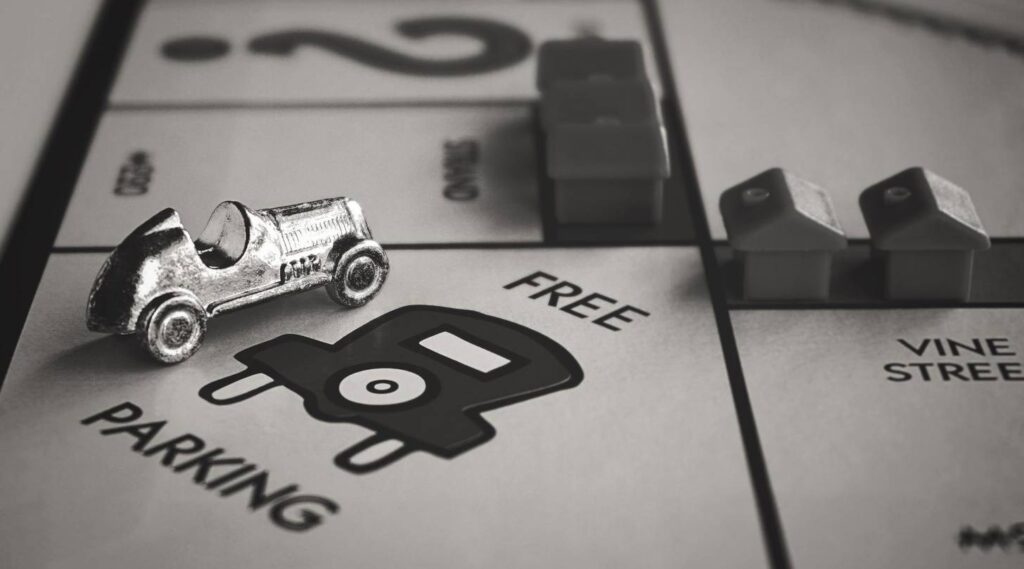
A woman invented this firstThe story you grew up with—that a New Jersey salesman named Charles Darrow invented Monopoly and sold it to Parker Brothers in 1935, becoming the first millionaire game designer in history—is only half true. The real inventor was Elizabeth Magie, a writer, actress, and follower of the economist Henry George, who patented “The Landlord’s Game” in 1904. She built it deliberately as a teaching tool to show how land monopolism crushes everyone except the landlord. The game spread through progressive social circles for decades, played on handmade boards, before it ever reached a factory floor.
Darrow learned the game through friends, made his own set, and pitched it to Parker Brothers—who initially rejected it with a list of 52 design errors before reversing course and buying it in 1935. They also quietly purchased Magie’s original patent, paying her $500 and no royalties. Darrow received millions. Magie’s contribution wasn’t widely acknowledged until decades of legal battles began prying open the history, and even then, Parker Brothers’ parent company resisted owning any of it.
Scrabble
Two decades of rejectionAlfred Mosher Butts was an architect in Jackson Heights, Queens, when the Depression took his job and left him with time and a methodical mind. He spent months analyzing letter frequency in newspapers—The New York Times, The Herald Tribune, The Saturday Evening Post—counting how often each letter appeared, then assigned tile values accordingly. He called the game Lexiko first, then Criss-Cross Words, and he pitched it to every major game company he could find. Parker Brothers said no. Milton Bradley said no. He sold handmade copies from his home for years.
The tide turned when James Brunot, a Connecticut businessman, bought the manufacturing rights, renamed it Scrabble, and began producing it by hand with his wife in their cottage. Even that was going nowhere until a Macy’s buyer happened to play the game on vacation and returned to New York to place a large order. By summer 1952, Scrabble had become the best-selling game in America. Butts, who had spent nearly two decades being told no, seemed mildly baffled by the whole thing right until the end.
Clue
Born during the London BlitzAnthony Pratt was a British musician who loved parlor murder-mystery games—the kind where guests played detective, wandered through a country manor, and accused each other of invented crimes. When WWII blackouts made those gatherings impossible, Pratt turned the idea into something two people could play at home. He and his wife Elva designed the board on their dining-room table in Birmingham in 1943, sketching out the rooms and weapons while sirens sounded outside. He applied for a patent in 1944, with the working title “Murder!”
Waddington’s published it in Britain in 1949 as Cluedo—a blend of “clue” and the Latin word-game “Ludo”—and Parker Brothers released it the same year in the US simply as Clue. Pratt, eager to close the deal, signed over all overseas royalty rights for £5,000. By the time Clue became a global phenomenon and eventually a 1985 film, he had long since missed out on decades of earnings. He died in 1994, largely forgotten by the company that had profited most from his wartime idea.
Candy Land
A gift from a polio wardIn 1948, Eleanor Abbott was recovering from polio in a San Diego hospital, surrounded by children who were going through the same thing. To pass the time and lift their spirits, she sketched a simple game: a winding path of colored squares through a landscape of candy castles and gumdrop mountains, no reading required, no complicated rules to follow. The children in the ward tested it with her. When a friend suggested she send the idea to Milton Bradley, she mailed in her drawings—and the company bought it almost immediately.
Milton Bradley released Candy Land in 1949, and it became their highest-selling board game. Abbott donated her royalty income to charities serving children in need. The company never advertised the game’s connection to polio—the disease was still terrifying families across the country, and that wasn’t a story anyone wanted on a cheerful box of sweets. It wasn’t until the fiftieth-anniversary edition in 1998 that Abbott’s real story began circulating widely. She had made something beautiful for the smallest patients in a ward, and the world played it for fifty years without knowing why.
Risk
Made by a filmmaker, not a generalAlbert Lamorisse is best known for directing The Red Balloon, a 1956 French short film that won the Palme d’Or at Cannes and an Academy Award. What almost nobody remembers is that the following year, he also invented Risk. He called it La Conquête du Monde—The Conquest of the World—and released it in France through the publisher Miro in 1957. Lamorisse reportedly conceived the game during a family vacation. The map he drew was stylized, almost abstract: a world divided into territories, nothing pretending to be a real military simulation.
Parker Brothers acquired the rights and released it in the US in 1959 as Risk: The Continental Game. They adjusted the rules for American players, but the fundamental shape of the game—massing armies, pressing forward, watching an alliance collapse because someone got greedy with Asia—was all Lamorisse’s. He died in 1970 in a helicopter crash while filming in Iran. Risk went on to become one of Parker Brothers’ most durable titles, still in print and still causing arguments around kitchen tables more than sixty years later.
The Game of Life
A 23-year-old with idle pressesMilton Bradley—the man, not yet the company—was a young lithographer in Massachusetts when he invented The Checkered Game of Life in 1860. He had been running a small printing business, and with his presses underused, he turned to game-making. The original was a checkerboard of 64 red and white squares, and the goal was to reach “Happy Old Age” by accumulating points for virtues like perseverance and honor, while avoiding squares for poverty and disgrace. It was, in its way, a morality lesson you played with a spinner.
It sold 45,000 copies in its first year—a remarkable number for 1860—and turned the Milton Bradley name into a going concern. The version most people grew up with, complete with the plastic spinner, tiny cars, and the little blue and pink pegs representing your family, was a 1960 redesign created for the company’s centennial. The original game’s moral framework—virtue rewarded, vice punished—got softened considerably over a century of revisions, replaced by something closer to luck and circumstance, which, depending on your philosophy, may be the more honest version.
Trivial Pursuit
Two journalists, a missing pieceOn December 15, 1979, Chris Haney and Scott Abbott sat down in Montreal to play Scrabble. Haney was a photo editor at the Montreal Gazette; Abbott was a sports journalist at The Canadian Press. They found pieces missing from the Scrabble set and, in the way that sometimes happens over drinks, started talking about how it couldn’t be that hard to invent a game themselves. They reportedly worked out the basics of Trivial Pursuit that same evening, sketching the wheel-shaped board on paper right there at the table.
It took two more years and a network of investors to produce an actual product. The game went on sale in 1981 but wasn’t profitable until 1983. Once it caught on, it caught on hard: more than 100 million copies sold worldwide. Haney and Abbott sold the rights to Hasbro in 2008 for $80 million. Haney died in 2010. Abbott lived to see Trivial Pursuit become a category of its own—the kind of game that left you feeling either quietly vindicated or mildly humiliated, depending on which wedge you still couldn’t seem to fill.
Battleship
Graph paper came firstLong before Milton Bradley put plastic grids and red and white pegs into a cardboard box, Battleship was a game you played on graph paper. Historians trace pencil-and-paper versions of the grid-guessing naval game to French and Russian soldiers during World War I—a way to fill time between shifts. The first commercial version, a printed pad called Salvo, appeared in 1931. Milton Bradley published its own pad-and-pencil edition, Broadsides, the Game of Naval Strategy, in 1943.
The version everyone remembers—two plastic trays, ships that click satisfyingly into place, the ceremonial moment of calling out “B-7” and watching someone’s face fall—arrived in 1967 when Milton Bradley packaged it as a board game. The plastic made it faster to reset and easier to replay, but the core mechanic was unchanged from what soldiers had been doing with graph paper for half a century. “You sunk my battleship” became one of the most quoted lines in American advertising—not something anyone sketching grids in a military barracks in 1917 could have imagined.
None of these eight games began in a toy company boardroom. They started with people solving a specific problem—too much time, not enough money, a hospital ward full of sick children, a blackout keeping everyone inside. That’s not a tidy origin story with a lesson attached. It’s just how some things actually get made… and somehow end up lasting forever.
How much do you remember?
3 quick questions from the story above.
Enjoyed that? Play a full trivia quiz:
Play a Entertainment quizFrequently asked questions
Who actually invented Monopoly — Elizabeth Magie or Charles Darrow?
Both played a role, but Magie got there first. She patented The Landlord’s Game in 1904, thirty years before Darrow sold his version to Parker Brothers. Darrow learned the game through social circles, made his own copy, and received the credit — and the royalties. Parker Brothers paid Magie $500 for her original patent with no royalties attached. If you enjoy discovering the hidden histories behind everyday favorites, you might also like reading about the gadgets from the 70s and 80s that quietly vanished from American homes.
Which classic board games were invented during World War II?
Clue is the clearest example — Anthony Pratt conceived the murder-mystery game during WWII blackouts in Birmingham, England, applying for a patent in 1944. The very isolation that prevented parlor parties gave him the motivation to build something two people could play at home. These artifacts born of wartime constraint have a way of outlasting their moment, much like the everyday objects from the 1960s that shaped daily life and then faded away.
Which board game was created for children in a polio ward?
Candy Land. Eleanor Abbott invented it in 1948 while she herself was recovering from polio in a San Diego hospital, designing the game specifically to entertain the children on the ward with her. Milton Bradley published it in 1949, and it quickly became their top-selling game. Abbott donated her royalties to charities serving children in need. Games like Candy Land were woven into the fabric of family weekends — a tradition worth revisiting in our look at the Sunday rituals that defined American family life.
Was Battleship originally played with paper and pencil?
Yes. Grid-based naval guessing games circulated among soldiers during World War I, played on graph paper with a pencil. The first commercial product, a printed pad called Salvo, appeared in 1931. Milton Bradley sold its own paper version in 1943. The classic plastic board game with the satisfying click-in ships didn’t arrive until 1967 — proof that the best ideas often start with something much simpler than the finished version.