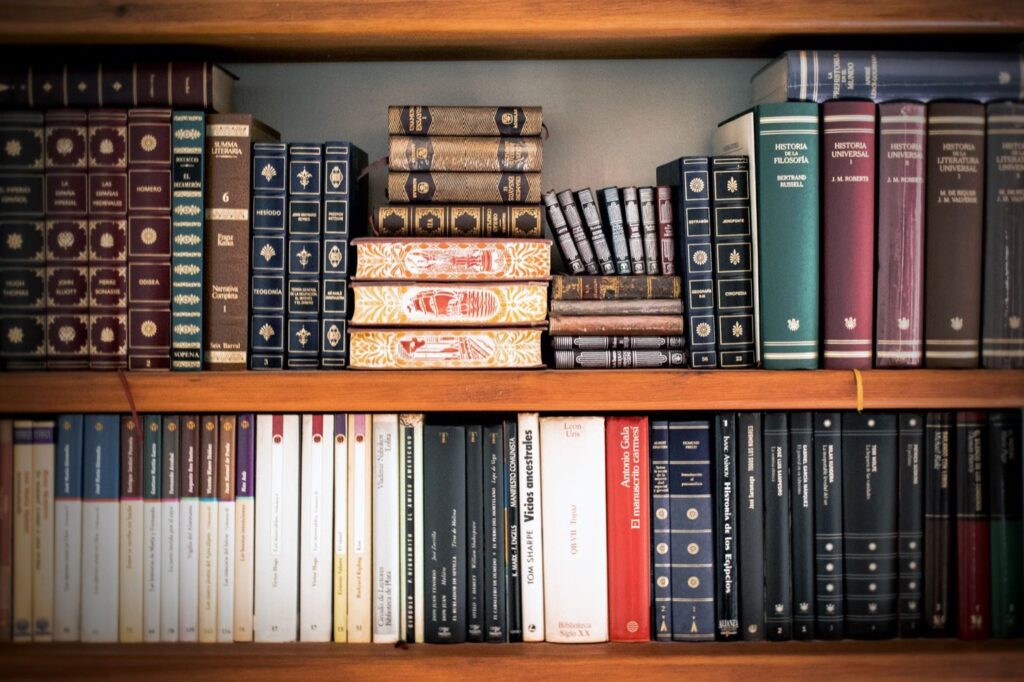
You probably met most of these books in a classroom, or on a rainy afternoon when someone handed you a dog-eared paperback and said you had to read it. What you may not have been told is that so many of them started with something real — a shipwreck, a storm, a dinner-party dare, a little girl asking for a story on a boat. The invention came later. The spark was true.
Here are eight novels you already half-remember, and the real person or event sitting quietly behind each one. Some of the connections are famous; a couple might still surprise you. Either way, the next time you pick one of these up, you’ll be reading two stories at once.
Moby-Dick
The whale fought backOn November 20, 1820, a Nantucket whaleship called the Essex was rammed — twice — by an enormous sperm whale in the South Pacific, roughly two thousand miles west of South America. The ship went down in minutes. Twenty men crowded into open whaleboats and drifted for about three months; only eight came home, after an ordeal so grim it turned to cannibalism. The captain was George Pollard Jr.
Herman Melville knew the story well, and even met one of the survivors’ sons. When you read about Ahab’s doomed hunt, you’re standing in the wake of a real crew who learned, the hard way, that the whale does not always lose.
Frankenstein
Born on a rained-out holidayIn the summer of 1816, a volcanic eruption half a world away had thrown so much ash into the sky that Europe barely got a summer at all — people called it “the year without a summer.” Stuck indoors near Lake Geneva with Lord Byron and Percy Shelley, eighteen-year-old Mary Shelley listened to the men argue about whether a dead body might be jolted back to life.
Byron set the group a dare: each of you, write a ghost story. Out of that gloomy, lamplit house came a nightmare Mary turned into Frankenstein; or, The Modern Prometheus, published two years later. One wretched holiday, and modern science fiction had its first monster.
Alice’s Adventures in Wonderland
A story for a real AliceThere really was an Alice. Alice Liddell was the daughter of a dean at Christ Church, Oxford, and on July 4, 1862, she and her two sisters coaxed a shy Oxford mathematician named Charles Dodgson into telling them a story during a rowing trip up the river.
He spun a tale about a girl who tumbles down a rabbit hole, and ten-year-old Alice begged him to write it down. He did, and later published it under the name you know — Lewis Carroll. The next time you picture Alice following that waistcoated rabbit, picture a real child in a real boat, asking for just one more story.
The Adventures of Sherlock Holmes
The doctor who read strangersBefore Arthur Conan Doyle was a novelist, he was a medical student in Edinburgh, and one of his teachers was a surgeon named Dr. Joseph Bell. Doyle met him in 1877 and worked as his clerk. Bell had an uncanny habit of glancing at a patient and deducing his trade, his travels, even his ailments before the man had said a word.
That party trick became a detective. When Holmes startles Watson by naming a stranger’s profession from a glance, you’re watching Dr. Bell at work. Bell always waved the credit away — he told Doyle, “You are yourself Sherlock Holmes.”
Dracula
A borrowed name, a borrowed dreadBram Stoker never set foot in Transylvania. He built his Count out of library research — folklore, travel books, and the shadow of a real fifteenth-century ruler of Wallachia, Vlad III, remembered as Vlad the Impaler for the brutal way he dealt with his enemies. Vlad also went by a family name you’ll recognize: Dracula.
The historical Vlad was a warlord, not a vampire, and the two don’t share much beyond that borrowed name and a chill. But Stoker needed somewhere remote and half-mythic to set his horror, and that corner of Europe — and that menacing name — gave him both.
The Great Gatsby
The neighbor nobody quite knewWhen F. Scott Fitzgerald lived on Long Island in the early 1920s, he had a mysterious, lavish neighbor named Max Gerlach — a bootlegger who threw enormous parties, claimed an Oxford education, hinted at grand connections, and liked to call people “old sport.” If that rings a bell, it should.
Fitzgerald folded Gerlach, a bit of himself, and an old flame named Ginevra King into the shimmering, self-invented figure of Jay Gatsby. The green light may be fiction, but the man staring at it was stitched together from people Fitzgerald actually knew.
Winnie-the-Pooh
A bear at the zooThe real Winnie was a black bear cub bought in 1914 for twenty Canadian dollars by a soldier and veterinarian, Harry Colebourn, in White River, Ontario, as he headed off to the First World War. He named her after his hometown of Winnipeg and, before shipping to France, left her at the London Zoo, where she stayed until 1934.
A. A. Milne’s small son, Christopher Robin, adored visiting her. He loved that gentle bear so much that he renamed his own stuffed toy — once plain “Edward Bear” — Winnie-the-Pooh. The hundred-acre adventures were invented, but the bear who gave him the name was real, and you could have shaken her paw.
Lord of the Flies
What the real boys didWilliam Golding imagined schoolboys marooned on an island sliding into savagery, and the book became a byword for how thin the veneer of civilization supposedly is. But there is a real castaway story that answers it, and it ended very differently.
In 1965, six Tongan teenagers were blown off course and shipwrecked on the uninhabited island of ’Ata. They survived there for fifteen months — and instead of turning on each other, they built a garden, kept a fire going, set one boy’s broken leg, and worked out their quarrels by cooling off apart. When a passing Australian captain finally found them, they were fit, organized, and still friends. Keep that one in your pocket for anyone who tells you Golding had the last word.
None of this makes the novels less magical — if anything, it’s the other way around. A storm, a stranger, a bear at the zoo, six boys who refused to fall apart: the writers saw something true and couldn’t let it go. That’s worth remembering the next time one of these turns up on your nightstand.
Frequently asked questions
Did Alice in Wonderland have a real Alice?
Yes. Alice Liddell, the daughter of an Oxford dean, asked Charles Dodgson (Lewis Carroll) for a story during a boating trip on July 4, 1862, and he wrote it down for her. The book was published three years later in 1865.
Was Dracula based on Vlad the Impaler?
Partly. Bram Stoker borrowed the name Dracula and the Transylvanian setting from the real fifteenth-century ruler Vlad III, but the two figures share little beyond that. The vampire itself came from folklore and Stoker’s imagination, much like other stories where a real spark led somewhere unexpected.
Who was the real Winnie-the-Pooh?
Winnie was a Canadian black bear who lived at the London Zoo from 1914 to 1934. A. A. Milne’s son Christopher Robin loved her so much that he renamed his teddy bear after her.
What really happened to the boys on the island, unlike in Lord of the Flies?
In 1965, six Tongan teenagers were shipwrecked on the island of ’Ata and survived fifteen months by cooperating rather than turning violent. It’s a reminder that books, like the ones that once got banned, don’t always get the last word on how people behave.
Sources
How much do you remember?
3 quick questions from the story above.
Enjoyed that? Play a full trivia quiz:
Play a Literature quiz