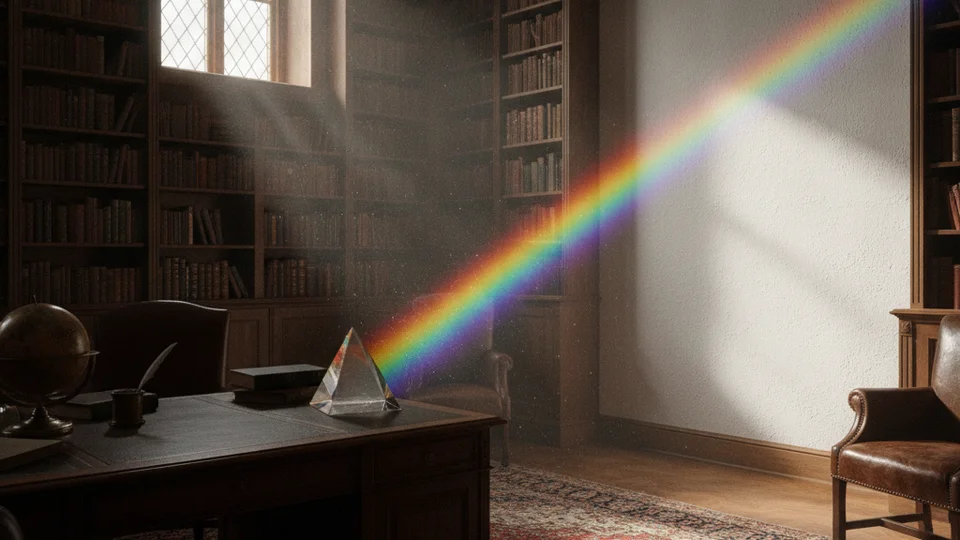
We like to picture invention as a lightning bolt — a genius alone in a lab, shouting “Eureka!” But an awful lot of the things we use every day showed up by accident, when somebody spilled the wrong thing, forgot to clean up, or noticed a “failed” experiment behaving strangely. Plenty of world-changing tools did come from patient, deliberate engineering — the ancient Roman inventions we still use every day, from concrete to the calendar, are proof of that — but the ones below slipped in through the back door.
The real skill wasn’t causing the accident. It was being curious enough not to throw the mess away. Here are ten inventions the world stumbled into.
Penicillin
A moldy dish nobody cleanedIn 1928, bacteriologist Alexander Fleming came back from vacation to a messy lab and a petri dish he’d left out. A blob of mold had grown on it — and everywhere the mold touched, the bacteria had died.
Most people would have rinsed the dish and moved on. Fleming looked closer, and the world got its first true antibiotic. It’s fair to say that one dirty dish has saved more lives than almost any invention in history.
The Microwave Oven
A melted candy barIn 1945 an engineer named Percy Spencer was standing near a magnetron — a device for radar — when he noticed the chocolate bar in his pocket had melted. Curious, he tried popcorn next. It popped.
Within a couple of years that stray observation became the microwave oven. The first models were nearly six feet tall; it took decades to shrink one down to fit on your kitchen counter.
Post-it Notes
A glue that barely workedA 3M scientist named Spencer Silver was trying to make a strong adhesive and instead came up with a weak one that stuck lightly and peeled off clean. For years nobody knew what to do with it.
Then a colleague, tired of his paper bookmarks falling out of his church hymnal, coated them with the stuff. The Post-it note was born — a hit product built entirely on a glue that had failed at its one job.
Velcro
Burrs on a dogAfter a walk in the woods in the 1940s, Swiss engineer George de Mestral got curious about the burrs stuck to his socks and his dog’s fur. Under a microscope he saw tiny hooks that grabbed onto anything with a loop.
He spent years turning that idea into hooks-and-loops you could sew onto anything. If you’ve ever fastened a sneaker or a jacket with that satisfying rrrip, you have a walk in the woods to thank.
Safety Glass
A flask that wouldn't shatterAround 1903 a French chemist knocked a glass flask off his bench — but instead of shattering, it just cracked and held together. It had held a coating that dried into a thin film inside.
That accident led to laminated safety glass, the kind that holds together instead of spraying everywhere. It’s in your car windshield right now, quietly doing its job.
The skill wasn’t causing the accident. It was being curious enough not to throw the mess away.
The Popsicle
A cold night and a forgotten cupIn 1905 an eleven-year-old named Frank Epperson left a cup of flavored soda powder and water on his porch overnight, with the stirring stick still in it. San Francisco had a rare cold snap, and by morning it was frozen solid.
He pulled it out by the stick and had himself a treat. Years later he patented it. Not bad for a kid who just forgot to bring his drink inside.
X-rays
A mysterious glowIn 1895 the physicist Wilhelm Röntgen was experimenting with a vacuum tube when he noticed a screen across the room glowing, even though the tube was covered. Some invisible ray was passing straight through solid objects.
One of the first images he made was of his wife’s hand, bones and wedding ring clear as day. She is said to have gasped, “I have seen my death.” Medicine was never the same.
Super Glue
Too sticky to be usefulDuring World War II, a researcher named Harry Coover was trying to make clear plastic gunsights when he kept producing a substance that stuck to absolutely everything. Annoyed, he set it aside as a failure.
Years later he realized that sticking to everything was the whole point. Super glue went on sale in the 1950s, and it’s been welding our broken mugs and eyeglasses back together ever since.
Play-Doh
A wallpaper cleanerPlay-Doh started life as a putty for cleaning coal soot off wallpaper. When home heating changed and the cleaner stopped selling, the company was nearly sunk.
Then someone noticed schoolchildren using the stuff for arts and crafts. They pulled the soap out, added color and a smell you’d know anywhere, and a doomed cleaning product became one of the best-selling toys of all time.
The Slinky
A spring that fell off a shelfIn 1943 a naval engineer named Richard James was working on springs to steady equipment on ships when he knocked one off a shelf. Instead of clattering to the floor, it “walked” down in a graceful, tumbling arc.
His wife Betty saw a toy, gave it a name, and the Slinky went on to sell by the hundreds of millions. If you ever sent one down the stairs, you know the appeal never really wears off.
There’s a lesson buried in all of this, and it isn’t “get lucky.” Every one of these started with a mistake that most of us would have swept into the trash. The difference was somebody who stopped, looked again, and asked what the accident was trying to tell them.
Frequently asked questions
What famous inventions were discovered by accident?
Penicillin, the microwave oven, the Post-it note and Velcro all came from mistakes or stray observations. As the article puts it, the real skill wasn't causing the accident — it was being curious enough not to throw the mess away.
Was penicillin really discovered by accident?
Yes. In 1928 the bacteriologist Alexander Fleming came back from vacation to a messy lab and a petri dish he'd left out. Mold had grown on it, and everywhere the mold touched, the bacteria had died. Instead of rinsing the dish, he looked closer — and the world got its first true antibiotic.
How was the microwave oven invented?
In 1945 an engineer named Percy Spencer was standing near a radar magnetron when he noticed the chocolate bar in his pocket had melted. He tried popcorn next; it popped. Within a couple of years that stray observation became the microwave oven. For older ingenuity, see what the ancient Egyptians invented that we still use.
Sources
How much do you remember?
3 quick questions from the story above.
Enjoyed that? Play a full trivia quiz:
Play a Science quiz