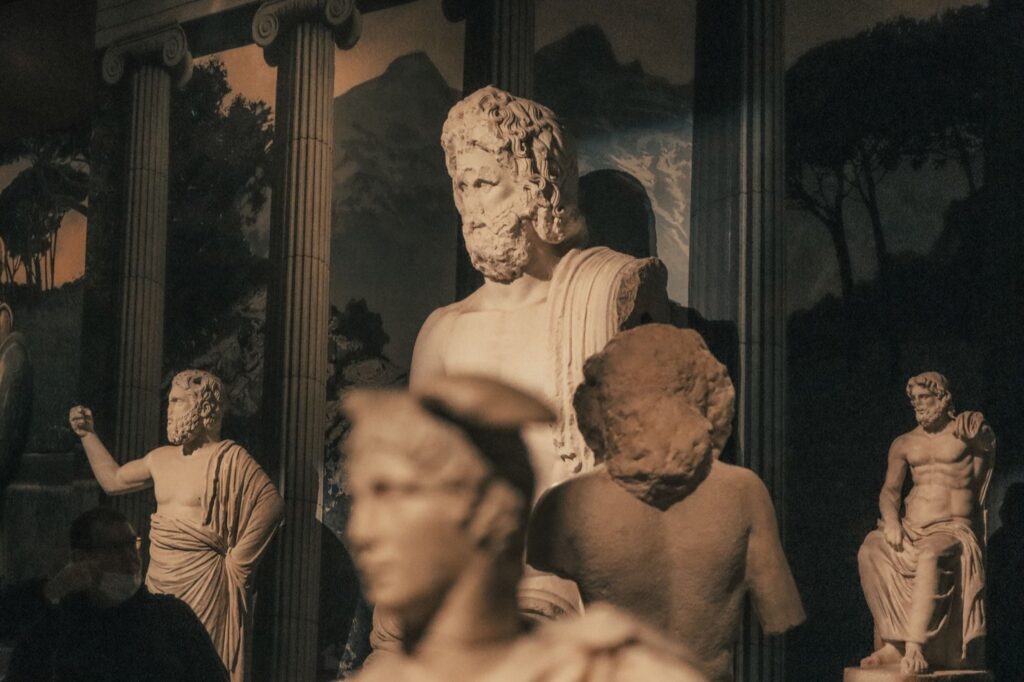
Walk through the Egyptian or classical wing of almost any big museum and you start to notice it after a while. One pharaoh, then another, then a Roman general, then a goddess — and over and over, right in the middle of the face, a flat scar where the nose used to be. If you have ever stood close to one of these pieces, you may have wondered whether thousands of years is simply hard on a chunk of stone, or whether someone did this on purpose.
The honest answer is: both, depending on which statue you are looking at. Some noses fell victim to gravity and bad luck. Others were knocked off deliberately, by people who believed a face in stone could see, hear, and breathe — and who wanted to put a stop to it. There is even a famous case, the Great Sphinx of Giza, where the real culprit was neither time nor Napoleon’s cannons, whatever your schoolbooks may have told you. And one popular explanation you may have scrolled past online turns out to be mostly a modern myth. Here are six reasons the ancient world ended up so short on noses.
The nose sticks out, so it breaks first
Gravity does the restStart with the least dramatic reason, because it is also the most common. A nose is the part of a face that juts farthest forward, which makes it the first thing to meet the floor when a statue topples, the first thing a careless mover clips against a doorframe, and the first thing centuries of wind and blowing sand grind down. The same thing happens to fingers, ears, and outstretched arms — the bits that stick out are simply the bits that snap off.
You already know this instinct without thinking about it. The Venus de Milo is famous for her missing arms, and most scholars now agree they were already gone when she was dug up on a Greek island in 1820. Nobody suspects a conspiracy there. Arms protrude, so arms break. A nose is just the version of that story that happens to sit in the middle of a face, where you cannot help but notice it.
Egyptians believed a statue could breathe
So they stopped itIn ancient Egypt, a statue was not a decoration. It was understood as a resting place where a god or a dead person’s spirit could live and act in the world. The Brooklyn Museum’s curator of Egyptian art, Edward Bleiberg, points out that the very word for sculpture meant, roughly, “a thing that is caused to live.” If a carved figure could truly draw breath, then there was a chillingly logical way to shut it down.
You broke its nose. Smashing off the nose was believed to suffocate the spirit inside, cutting off the breath that kept it animate. For a long time museums assumed the breakage was just the wear of ages, but Bleiberg noticed the damage was far too consistent for that — the same blow, in the same spot, on figure after figure. It was targeted, not random, and once you know to look for it, the pattern turns up everywhere in Egyptian collections.
The damage went well beyond the nose
Ears, hands, the lotHere is the detail that convinces scholars this was deliberate rather than clumsy. The same statues often had their ears chipped away, so the spirit could not hear a prayer, and their hands or arms knocked off, so it could neither make offerings to the gods nor receive them. The mutilation followed the logic of a living body being switched off, function by function.
And it was done to flat carvings too. A figure in a two-dimensional temple relief cannot fall over and land on its nose, yet those faces were chiseled out just the same. That single fact rules out accident as the whole story. Someone stood there with a tool and went after the senses one by one — eyes, ears, mouth, nose — the way you might unplug a machine you were afraid to leave running.
Erasing a rival from history
The ancient cancel buttonNot all of this was about the supernatural. Sometimes it was raw politics. Egyptian rulers defaced the monuments of predecessors they wanted scrubbed from memory — the pharaoh Hatshepsut’s images were systematically attacked by her successor, and the religious rebel Akhenaten had his works torn down once the old gods were restored.
The Romans turned this into a formal procedure with a grim Latin name: damnatio memoriae, the condemnation of memory. A disgraced emperor could have his statues smashed, his name scratched off inscriptions, or his face simply recarved into the next ruler’s likeness — thrifty and vengeful at once. Emperors like Domitian and the murdered young co-ruler Geta got this treatment, their features chiseled away so thoroughly that it was meant to be as if they had never reigned.
Tomb robbers covering their tracks
Insurance against revengeThere was also a very practical fear at work in the tombs. If you believed the dead could reach back and punish the living, then breaking into someone’s burial chamber was a dangerous business. Robbers are thought to have defaced the statues and carved images they passed, not out of spite but as a kind of insurance — disabling the dead person’s power before helping themselves to the gold.
Tellingly, these vandals often left the written name intact and went only for the face. They were not trying to erase who the person was — that is the opposite of what a political erasure does. They were trying to make sure the person could not see them, reach them, or come after them in the dark. It is a strange thing to picture: a thief pausing, chisel in hand, to neutralize a carved face before daring to touch the treasure beside it.
The “hidden African features” myth
What scholars actually sayYou may have seen the claim online that the noses were knocked off to disguise the African features of the people depicted. It is an understandable suspicion, because there really was a long, ugly habit among nineteenth-century Europeans of downplaying that ancient Egypt was an African civilization. But the physical evidence does not support the idea that someone went around removing noses for that reason.
The damage is too old, too widespread, and too consistent with the religious and political patterns above — and it shows up on Greek and Roman faces too, not only Egyptian ones. Scholars are blunt that the real distortion of the record happened in books and museum labels, not with a chisel. The erasure was in how the story was told, which is a different and in some ways more lasting kind of vandalism.
So the next time you stand in front of one of these quiet, broken faces, look a little closer at the scar. A clean, chiseled cut is a person’s decision reaching across thousands of years; a worn, rounded stub is just time doing what time does. Either way, the missing nose is rarely the accident it looks like at a glance.
Frequently asked questions
Did Napoleon’s soldiers shoot off the nose of the Great Sphinx?
No. Sketches of the Sphinx made decades before Napoleon reached Egypt already show it without a nose. The most reliable account blames a 14th-century iconoclast who chiseled it off because locals were making offerings to the statue.
Were ancient statues’ noses removed to hide African features?
Scholars say the physical evidence does not back this up: the damage is ancient, widespread, and follows clear religious and political patterns — and it appears on Greek and Roman faces too. The real whitewashing of ancient Egypt happened in how historians told the story, not with a chisel. You can see how central Egypt’s culture really was in things the ancient Egyptians invented that we still use.
How can you tell if a nose broke off by accident or on purpose?
Deliberate damage usually shows clean chisel or tool marks, and often appears alongside chipped ears or removed hands. Accidental loss tends to leave a worn, rounded stub. Tellingly, flat relief carvings had their noses cut out even though they could never have fallen over.
Why did ancient Egyptians go to the trouble of carving noses they might later destroy?
The destruction usually came much later and from different people — rival rulers, tomb robbers, or later religious groups — not the original artists. Many of these statues also appear among the ancient wonders and what became of them, where survival across millennia was never guaranteed.
Sources
How much do you remember?
3 quick questions from the story above.
Enjoyed that? Play a full trivia quiz:
Play a Art quiz