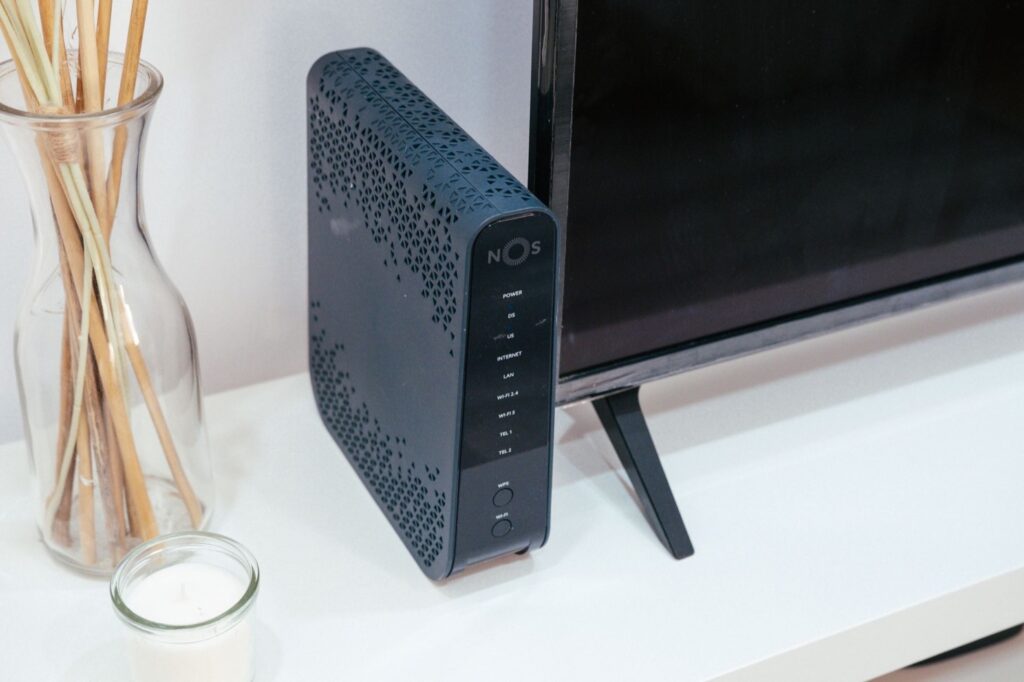
There’s a little box somewhere in your home — on a shelf, behind the television, tucked under the stairs — with a few blinking lights, and somehow it lets you read the news, call your grandchildren, and watch a film, all without a single wire running to your hands. You probably stopped wondering how years ago. Most of us did. The thing just works, so we let it.
But the honest answer is that none of it is magic, and most of it is simpler than the jargon makes it sound. We’re going to start with Wi-Fi — the one everybody asks about — and then open up six more everyday gadgets the same way. No engineering degree required. Just a plain look at what’s really happening when you tap, swipe, and connect.
Wi-Fi
Radio for your dataHere’s the thing that surprises people: Wi-Fi is radio. Not the kind that plays music, but the same family of invisible waves. Your router takes the internet signal arriving at your house and converts it into radio waves, broadcasting them through the air to your phone, tablet, or laptop — which translate those waves right back into web pages and video. It’s a two-way conversation happening thousands of times a second.
Most routers broadcast on two frequencies, and the difference is worth knowing. The 2.4 gigahertz band reaches farther and pushes through walls better, but it’s slower and more crowded — it’s the same slice of airwaves an old microwave oven uses, which is why your signal sometimes stutters while the popcorn cooks. The 5 gigahertz band is faster but doesn’t travel as far or punch through brick as well. That’s why the signal fades in the back bedroom: you’re simply getting too far from the box for the radio waves to arrive strong and clear.
Bluetooth
A whispered handshakeBluetooth is Wi-Fi’s quieter cousin, built for short distances — your hearing aids, a wireless speaker, the hands-free kit in the car. It uses that same busy 2.4 gigahertz radio band, which raises an obvious problem: how does it avoid getting tangled up with the Wi-Fi, the microwave, and the neighbor’s gadgets all shouting on the same channel?
The clever trick is called frequency hopping. Paired Bluetooth devices don’t sit on one frequency — they skip across dozens of them, changing channels about 1,600 times every second, in perfect lockstep with each other. If one channel is noisy, they’ve already jumped to a clearer one before it matters. It’s a bit like two people holding a conversation while strolling through a crowded party, drifting to wherever it’s quiet enough to hear.
Touchscreens
Your finger closes a circuitWhen you tap a phone screen, you might assume it’s sensing pressure. It isn’t — that’s why a gloved finger or a pencil eraser does nothing. Under the glass of most phones and tablets sits an almost-invisible grid of fine conductive wires carrying a tiny electrical charge. Hold the screen up to bright light at the right angle and you can sometimes catch the faint pattern of dots.
Your skin happens to conduct electricity. So the moment your fingertip lands on the glass, it quietly draws off a bit of that charge at exactly that spot, disturbing the electrical field. The screen’s controller notices the dip, works out precisely where it happened, and tells the phone where you touched. That’s the whole secret — your body isn’t pressing a button, it’s completing a circuit.
QR Codes
A barcode that grew upYou’ve seen them everywhere now — those little squares of black-and-white speckle on menus, parking signs, and medicine boxes. They were invented back in 1994 by an engineer named Masahiro Hara at Denso Wave, a Toyota company, because the ordinary striped barcodes on the factory floor simply couldn’t hold enough information about car parts.
A regular barcode stores data in one direction, in those vertical stripes. A QR code stores it in two directions — across and down — which is why it can pack in thousands of characters instead of a couple of dozen. Those three big squares in the corners are there so your camera can figure out which way is up, from any angle. And there’s a built-in safety net: a QR code carries spare copies of its own data, so it can still be read even if a good chunk of it is smudged or torn.
Tap-to-Pay
A tiny chip wakes upThat little tap of a card or phone at the checkout feels almost too easy to trust. It runs on something called near-field communication — a close-range radio cousin of the technology that tracks warehouse pallets and lets you through a toll with a windshield sticker. The reason you have to hold your card an inch away and no farther is deliberate: the signal is designed to reach only across that tiny gap.
Here’s the part that eases the worry. The payment terminal gives off a small radio field, and your card or phone actually borrows a little power from that field to wake up its chip — a contactless card needs no battery at all. Then, instead of handing over your real card number, it sends a one-time code good for that single purchase. Someone who managed to snatch it out of the air would be holding a key that already stopped working.
Noise-Canceling Headphones
Fighting sound with soundThe first time you press the button on a good pair, the drop is startling — the drone of an airplane cabin just melts away, and you can finally hear yourself think. It feels like the headphones are blocking the sound. What they’re really doing is far stranger: they’re adding sound of their own.
Tiny microphones on the earcups listen to the rumble coming at you. A small processor instantly builds a mirror-image wave — one shaped so that its peaks line up exactly with the noise’s valleys — and plays it into your ear. When the two waves meet, they flatten each other out, a tidy bit of physics called destructive interference. The steady, low hum of engines and air conditioners is the easiest to erase, which is why these headphones feel like a small miracle on a long flight and do rather less for a crying baby.
Fiber Optics
The internet made of lightLong before your Wi-Fi gets involved, most of your internet has already traveled a remarkable distance as pure light. Fiber-optic cables are threads of ultra-clear glass, each one about as thin as a human hair, and they carry information not as electricity but as flickers of light switching on and off unimaginably fast — each flash a tiny one or zero.
You might ask how light stays trapped inside a bendy cable without leaking out the sides. The answer is a beautiful quirk of physics called total internal reflection: the light strikes the wall of the glass thread at such a shallow angle that it simply bounces back inward, over and over, racing along the strand like a ball ricocheting down a hallway. That’s how a single hair-thin fiber can shuttle video, voices, and photographs between continents — at, quite literally, the speed of light.
None of these were handed down from on high — each one was somebody’s clever answer to a plain problem, and once you can see the trick inside it, the little box on the shelf stops being a mystery and starts being rather good company. The next time the lights blink, you’ll know what they’re up to.
Frequently asked questions
Why does my Wi-Fi get weaker in some rooms of the house?
Wi-Fi is radio, and radio waves lose strength as they travel and pass through walls, floors, and large appliances. The faster 5 GHz band fades over distance especially quickly, so a back bedroom or a room behind thick brick often gets a weaker signal. Moving the router to a central, open spot usually helps more than anything else.
Is tap-to-pay safe, or can someone steal my card by standing close?
Tap-to-pay is designed to work only across about an inch, and each tap sends a one-time code rather than your actual card number, so an intercepted signal is useless. It’s widely considered at least as secure as swiping or inserting a card. This kind of quiet, clever engineering turns up all over the place — see our look at inventions discovered completely by accident.
What is the difference between Wi-Fi and Bluetooth?
Both use radio waves, but they’re built for different jobs. Wi-Fi is made to carry a lot of data over a whole house and connect you to the internet, while Bluetooth is made for short-range links between nearby devices, like a phone and a pair of hearing aids or a speaker. Bluetooth also uses less power, which is why small wireless gadgets rely on it.
Why do noise-canceling headphones work better on planes than in a cafe?
They cancel steady, predictable sounds best — the constant drone of an aircraft engine or an air conditioner is easy for the headphones to match and flatten out. Sudden, varied sounds like voices or a crying child are much harder to predict and cancel, so they slip through. For more on the science of everyday life, try why the sky is blue.
Sources
How much do you remember?
3 quick questions from the story above.
Enjoyed that? Play a full trivia quiz:
Play a Science quiz