It’s one of the first questions a child ever asks, and one of the few most grown-ups can’t quite answer. The sky is blue all day, then turns gold and red at sunset, and somehow we just accept it. So here’s the real reason — and it’s more interesting than you’d think.
The short version: the sky isn’t colored at all. What you’re seeing is sunlight being bounced around by the air itself.
Sunlight isn’t really white
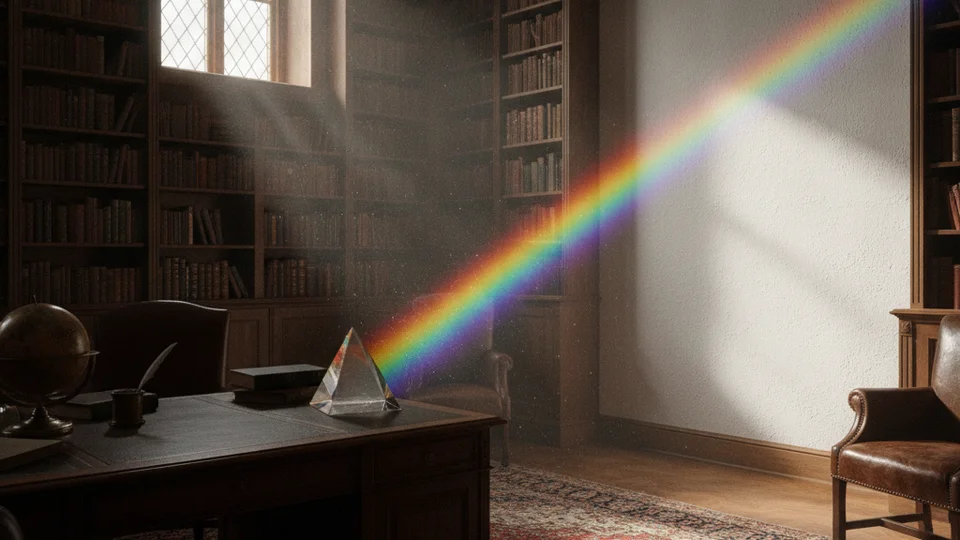
The light from the sun looks white, but it’s actually a mix of every color — the same colors you see when a rainbow splits it apart. Each color travels as a wave, and here’s the key: blue light travels in short, tight waves, while red light travels in long, lazy ones.
When sunlight pours into our atmosphere, it runs into countless tiny molecules of air. Those little molecules are just the right size to knock the short blue waves around and scatter them all over the sky, while the longer red waves mostly sail straight through.
So the whole sky glows blue
Because that blue light gets bounced in every direction, it reaches your eyes from all over — not just from the direction of the sun. Look up at any patch of daytime sky and you’re seeing scattered blue light coming at you from that whole stretch of air. Scientists call this “scattering,” and it’s why the sky looks blue from horizon to horizon.
You might wonder why the sky isn’t violet, since violet waves are even shorter than blue. A little of it is: our eyes are simply more sensitive to blue than violet, and the sun sends out less violet to begin with. So blue wins.
The sky isn’t colored at all. You’re watching sunlight get knocked around by the air itself.
Why sunsets turn red
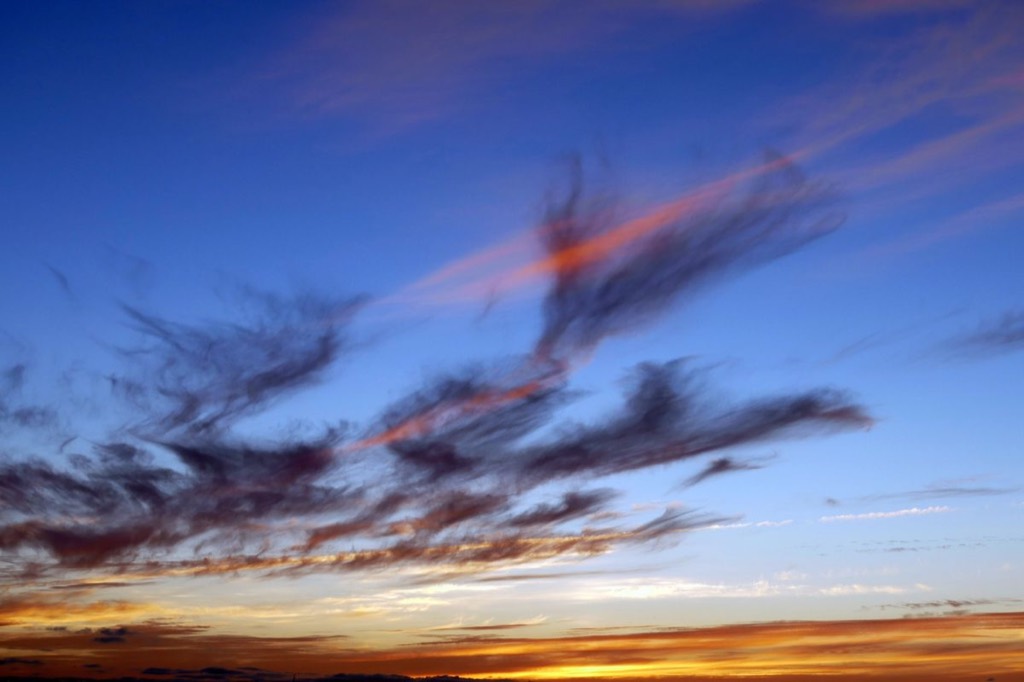
Now for the evening show. When the sun sinks low, its light has to slice through much more of the atmosphere to reach you — coming in at a long, shallow angle instead of straight down.
Over that longer path, nearly all the blue light gets scattered away long before it arrives. What’s left to reach your eyes are the reds, oranges, and golds — the long waves that survive the trip. That’s your sunset. Dust, smoke, and haze in the air can make it even deeper and richer, which is why some of the most spectacular sunsets come after a dry spell or a distant fire.
The same trick, all around you
Once you know what to look for, you’ll notice it everywhere. Distant mountains fade to a hazy blue for the same reason. Clouds look white because their water droplets are big enough to scatter all the colors equally, and all the colors together make white.
So the next time a child asks you why the sky is blue, you’ve got the answer ready — and a pretty good one to pull out at sunset, too.
Frequently asked questions
Why is the sky blue?
Sunlight is really a mix of every color. Blue light travels in short, tight waves that the tiny molecules of air scatter all over the sky, while longer red waves mostly sail straight through — so the whole sky glows blue from horizon to horizon. Scientists call it scattering.
Why isn't the sky violet instead of blue?
Violet waves are even shorter than blue, so a little of the sky is violet. But our eyes are more sensitive to blue than violet, and the sun sends out less violet to begin with — so blue wins.
Why do sunsets turn red?
At sunset the sun's light comes in at a long, shallow angle and has to slice through much more atmosphere. Over that longer path nearly all the blue light is scattered away before it reaches you, leaving the reds and oranges. It's one of those everyday puzzles — like why the ocean is salty — with a simple answer hiding behind it.
Sources
How much do you remember?
3 quick questions from the story above.
Enjoyed that? Play a full trivia quiz:
Play a Science quiz