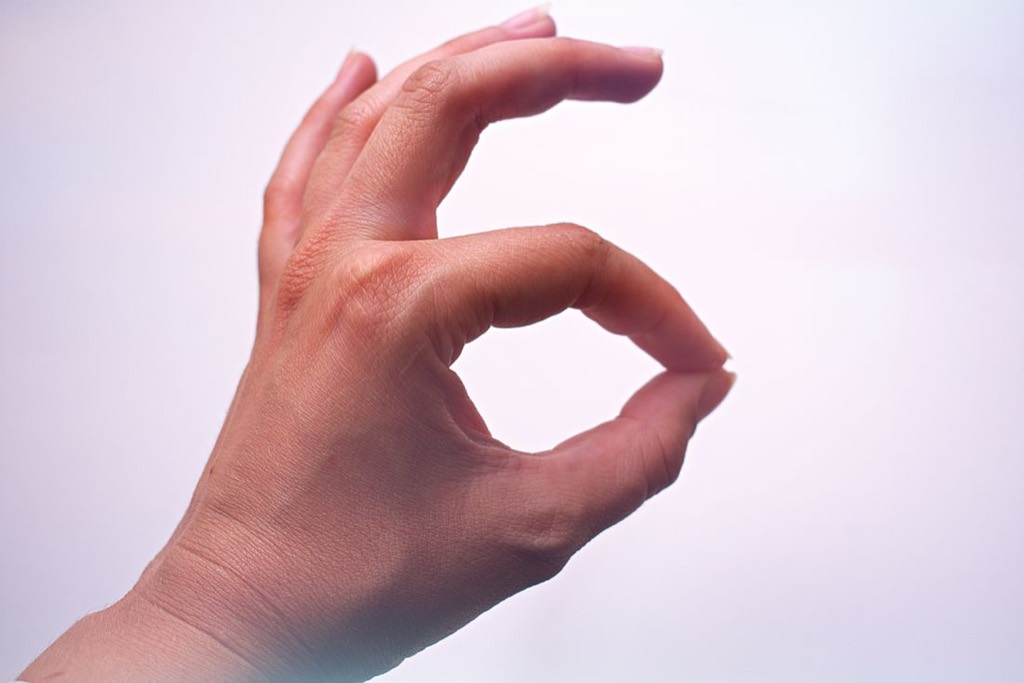
It might be the most useful word you own. “OK” works as a question, an answer, a shrug, and a sign-off. You can say it, type it, or make it with two fingers, and somebody halfway around the world will know exactly what you mean. For a word that does so much, though, almost nobody can tell you where it came from.
The real story is stranger than you’d guess. “OK” didn’t come from a foreign language, a Native American chief, or a railroad clerk. It started as a joke in a Boston newspaper — and very nearly disappeared before an election gave it a second life.
A joke that got out of hand
Back in the late 1830s, young, clever writers at big-city newspapers had a running gag: they loved deliberately misspelling things and then shortening them. “All correct” might be written as “oll korrect,” then trimmed to “O.K.” It was the kind of in-joke that felt fresh at the time, a bit like the way people play with abbreviations online today.
The very first time anyone can prove “O.K.” appeared in print was March 23, 1839, in the Boston Morning Post. The editor used it exactly that way — as a smirking shorthand for “all correct.” If you’d read it over breakfast, you might have chuckled and forgotten it by lunch. Most of those joke abbreviations did fade. This one caught a very lucky break.
The election that made it stick
The next year, 1840, President Martin Van Buren was running for re-election. Van Buren had grown up in Kinderhook, New York, which earned him the nickname “Old Kinderhook.” His supporters started calling themselves the “O.K. Club” — and suddenly those two letters were on banners, in chants, and all over the newspapers.
Van Buren lost the election, but “OK” won it. The campaign had pushed the little abbreviation into the mouths of ordinary people from coast to coast, and this time it didn’t fade. What began as a printer’s joke had become part of the language.
Van Buren lost the election, but “OK” won it.
How two letters conquered the world
Then came the telegraph. When messages were tapped out by hand and every keystroke cost time, a short, unmistakable word to confirm a message had arrived was pure gold. Operators used “OK,” and the railroads ran on it. From there it spread to business, then to daily speech, and eventually to nearly every corner of the planet.
Today “OK” is often called one of the most widely understood words on Earth. It slips easily into languages that share almost nothing else with English, in part because those two blunt sounds are so easy to say. Not bad for a throwaway line in a newspaper.
The origins that sound true but aren’t
Because nobody remembered the real story, people invented tidier ones. You may have heard that “OK” comes from the Choctaw word okeh, from a Greek phrase meaning “all good,” from French sailors marking cargo “au quai” (to the dock), or from a Civil War tally of soldiers returning with “0 killed.” Each has its fans, and President Woodrow Wilson liked the Choctaw version enough to spell it “okeh.”
We know these are wishful thinking thanks to a Columbia University scholar named Allen Walker Read, who spent years in the 1960s tracking the word through old newspapers. He found the Boston joke, traced the trail through the Van Buren campaign, and quietly retired the fancier legends. It’s a good reminder that the plainest explanation is often the right one — even when a better story is standing right next to it.
So the next time you dash off a quick “OK,” you’re using a 19th-century newspaper gag that survived a lost election and rode the telegraph around the world. Not every word gets a story like that.