Some of the most astonishing things in the world are happening in your backyard while you’re not looking. A bee turns a flower into a jar of honey. A spider builds a trap out of its own body overnight. None of it makes the news, because it happens every single day — and that’s exactly what makes it worth stopping for.
Here are seven everyday wonders of nature, explained the way you’d actually want them explained. We’ll start with the bees.
How Bees Make Honey
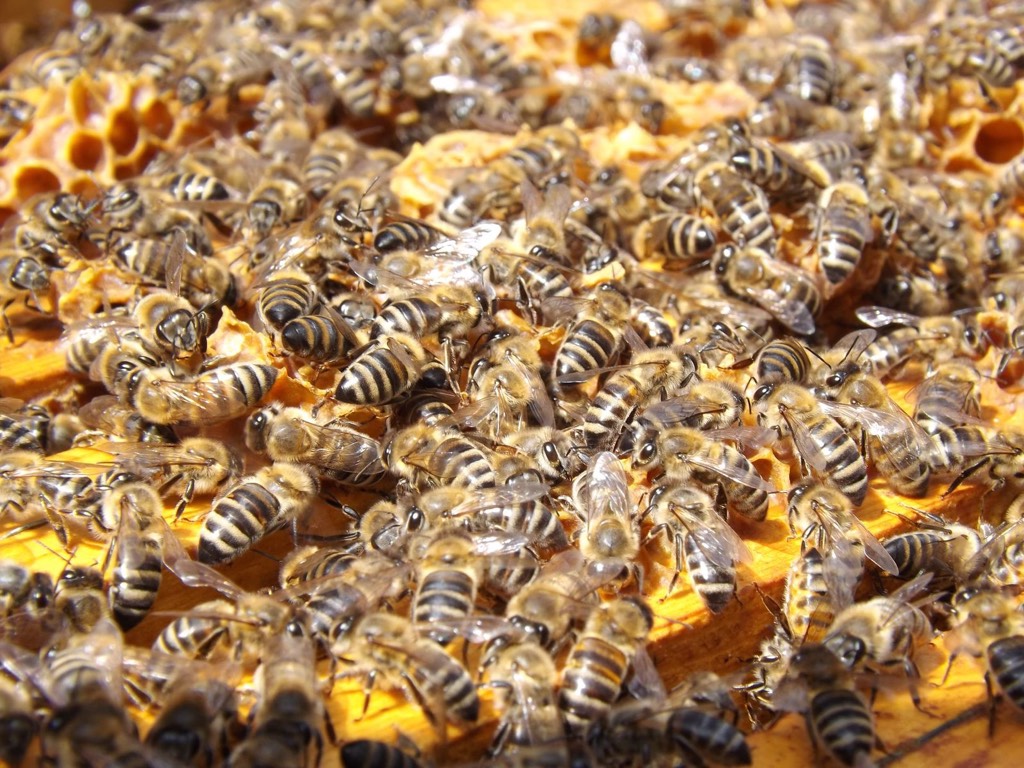
Nectar, enzymes, and a lot of fanningIt starts with a sip. A foraging honeybee drinks nectar from a flower and stores it in a special stomach — the “honey stomach” — that’s just for carrying, not digesting. On the way home, enzymes she added at the flower are already at work, breaking the nectar’s complex sugars into simpler ones.
Back at the hive she passes the nectar mouth-to-mouth to other workers, who keep processing it, then spread it into the wax cells of the comb. Now comes the patient part: the bees beat their wings to fan air across the comb, evaporating water until the runny nectar thickens into honey. When it’s ready, they cap the cell with a lid of wax to seal it. That’s the whole trick — flower, enzymes, evaporation, wax — and it’s why honey barely spoils.
Why Geese Fly in a V
Riding each other's airWatch a flock of geese head south and you’ll see that tidy V. It isn’t for looks, and it isn’t random. As a bird flaps, it leaves a swirl of rising air off each wingtip. The bird just behind and to the side can tuck into that upwash and get a little free lift, so the whole formation saves energy on a long trip.
The bird at the very front gets no such help, which is why leaders rotate to the back to rest. Studies of birds flying in formation have shown they even time their wingbeats to catch the good air — a level of coordination we’re still working out the details of.
How Spiders Spin Webs
Liquid silk that hardens in airA spider’s silk starts as a liquid protein stored inside its body. As the spider pulls it out through tiny nozzles called spinnerets, the protein stretches and lines up into a fiber that hardens — strong enough, gram for gram, to rival steel. A single spider can make several kinds of silk for different jobs.
To build the classic wheel-shaped web, the spider first lets out a thread that drifts on the breeze until it snags something, making a bridge. From there it lays down the spokes, then walks a spiral out to the edge — and here’s the clever bit: it makes the spokes out of dry silk, but the catching spiral out of sticky silk, so it doesn’t glue itself to its own trap.
Why Fireflies Glow
Cold light, made on purposeA firefly’s glow comes from a chemical reaction in its abdomen. A compound called luciferin reacts with oxygen, helped along by an enzyme, and the energy is released almost entirely as light instead of heat. That’s why it’s called “cold light” — you could hold it and never feel warm.
The flashing is a conversation, mostly about mating. Each species has its own rhythm of blinks, and males and females signal back and forth to find each other in the dark. It’s one of the most efficient lights in nature, and we still can’t build a bulb that wastes so little energy as heat.
None of it makes the news, because it happens every single day — which is exactly what makes it worth stopping for.
Why Leaves Change Color in Fall
The green was hiding the restThe reds and golds of autumn were, in a sense, there all along. Leaves are green because of chlorophyll, the pigment that captures sunlight to make food. But leaves also hold yellow and orange pigments year-round — the green is just so strong it hides them.
As days shorten and cool, the tree stops making chlorophyll and pulls its nutrients back into the branches for winter. The green fades, and the yellows and oranges that were always underneath finally show. The fiery reds are a little different: many trees make fresh red pigments in autumn, and a run of crisp, sunny days with cool nights brings out the brightest color.
How Salmon Find Their Home River
A map made of smellA salmon can spend years out at sea and then return to spawn in the very stream where it hatched. Scientists think it does this in two stages. Out in the open ocean, it likely uses the Earth’s magnetic field as a rough compass to steer back toward the right coastline.
Then, closer to home, it switches to its nose. Every stream carries its own faint chemical signature, and the salmon seems to have imprinted on that scent as a young fish. It follows the smell upriver, fork by fork, until it’s back where it started. It’s a remarkable feat, and researchers are still filling in exactly how the two systems work together.
How Ants Find Food
Writing in scentWhen one ant stumbles onto a crumb, it doesn’t keep the news to itself. On the way back to the nest it lays down a trail of chemicals called pheromones. Other ants pick up the scent, follow it to the food, and reinforce the trail with pheromones of their own as they return.
The clever part is what happens next. The shortest path gets walked most often, so it gets the strongest, freshest scent — and the longer routes fade as their trails evaporate. No ant is in charge and none of them can see the big picture, yet the colony as a whole homes in on the best route. That’s why a line of ants can seem almost deliberate: it’s thousands of tiny scent-messages, adding up.
What ties all of these together is that none of them needs a lesson to happen. The bee doesn’t know chemistry, the ant can’t see the map it’s drawing, and the tree isn’t deciding to be beautiful. They just do what they do — and if we slow down long enough to notice, the ordinary world turns out to be full of quiet, working marvels.
Sources
How much do you remember?
3 quick questions from the story above.
Enjoyed that? Play a full trivia quiz:
Play a Science quiz