If you ever stood at the foot of something truly old — a cathedral, a stone bridge, a pyramid in a travel photo — you probably felt that small jolt of disbelief. People did this. By hand. A very long time ago. And the strange part is that the disbelief hasn’t gone away just because we now have cranes, computers, and degrees in structural engineering. If anything, the more carefully the experts look, the more impressed they get.
What follows isn’t a list of spooky mysteries or little green men — the real explanations are human, and frankly more satisfying than any myth. These are eight structures where the honest answer is some mix of “here’s roughly how they did it” and “we still can’t quite believe they pulled it off.” Pour yourself something warm and come have a look.
The Great Pyramid of Giza
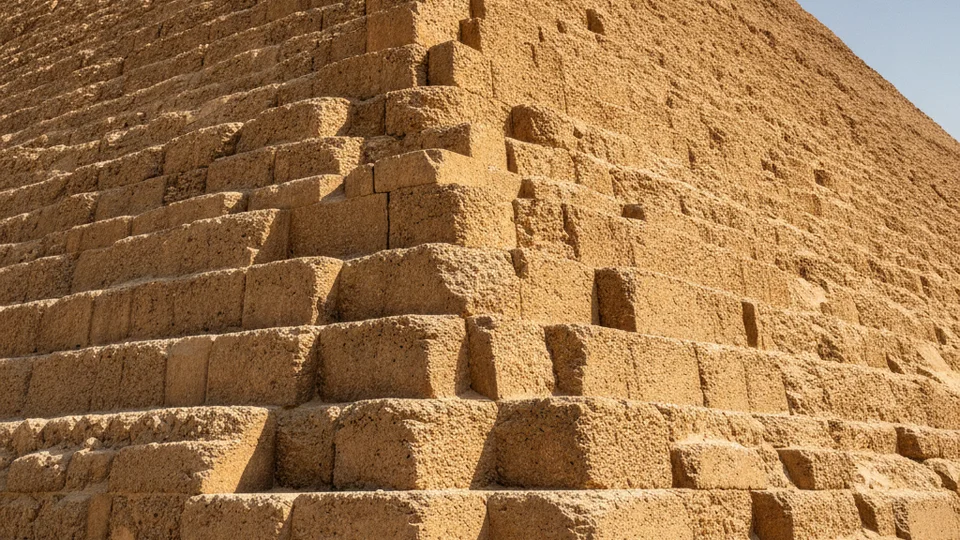
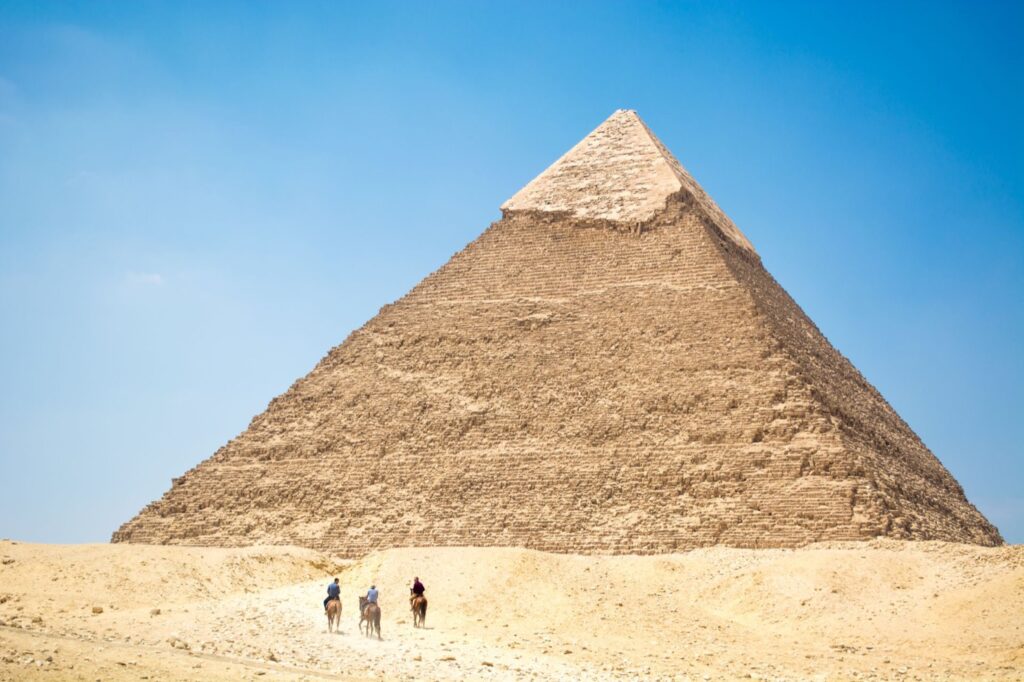
Flat to a faultHere is the fact that stops engineers cold: the base of the Great Pyramid, each side longer than two football fields, is level to within a few centimeters all the way around, and its corners are aligned to true north with an error smaller than a fraction of a degree. The builders had no satellites and no laser levels — they read the stars and used water and plumb lines. More than two million limestone blocks, averaging a couple of tons apiece, went up in roughly twenty years around 2550 BC.
The honest truth is we still argue about the ramps. Were they long and external, wrapped around the sides, or built inside the structure? Computer simulations have shown internal ramps could have carried the loads, but nobody has found the one diagram that settles it. What isn’t in doubt is the precision — that casing was once so finely fitted that the seams were said to be thinner than a knife blade.
The Pantheon’s Dome, Rome
Concrete that mends itselfWalk into the Pantheon and look up: that coffered dome, dedicated around 128 AD, is still the largest unreinforced concrete dome on Earth. No steel rebar, no modern additives — and it has held its shape for nearly nineteen centuries while concrete poured in your lifetime cracks and crumbles in decades. For a long while, that gap made no sense.
In 2023 a team led by MIT’s Admir Masic cracked part of it open. Those little white specks in Roman concrete, long dismissed as sloppy mixing, turn out to be “lime clasts” created by mixing the lime hot. When a crack forms and rainwater seeps in, the clasts dissolve and recrystallize — sealing the gap on their own, sometimes within a couple of weeks. The Romans built concrete that heals, and we are only now learning to copy it.
Stonehenge, England
The stones that came from WalesThe sheer heft of Stonehenge is impressive enough, but the real puzzle is the smaller “bluestones.” Geologists traced them to two quarries in the Preseli Hills of west Wales — Carn Goedog and Craig Rhos-y-felin — nearly 180 miles from Salisbury Plain. Charcoal at the quarries dates the work to around 3000 BC.
Picture it: people prying natural stone pillars loose with wooden wedges, easing them onto earthen loading bays, then dragging them on sledges the better part of two hundred miles. Why go so far when perfectly good stone sat nearby? That question is still open, and it’s the human stubbornness of the thing — not the weight — that gets you.
Sacsayhuamán, Peru
No knife slides throughAbove Cusco sit the zigzagging walls of Sacsayhuamán, built by the Inca from irregular stones — some weighing well over a hundred tons — fitted together so tightly you genuinely cannot slip a sheet of paper into the joints. There’s no mortar holding them. The fit itself does the work, which is partly why these walls have shrugged off earthquakes that flattened the Spanish buildings put up centuries later.
How do you fit boulders like puzzle pieces with no steel tools? Patiently. The Inca used harder hammerstones to pound the rock into shape, then set a block, marked the high spots where it bound, lifted it off, ground those spots down, and tried again — sometimes dozens of times per stone. It’s less a lost technology than a staggering amount of careful, repeated labor.
The Baalbek Megaliths, Lebanon
A thousand-ton afterthoughtAt the Roman temple complex of Baalbek, the foundation stones are already enormous — three blocks in the famous “Trilithon” weigh on the order of 800 tons each. But the showstopper never left the quarry. The “Stone of the Pregnant Woman” lies there still, about 68 feet long and weighing an estimated 1,000 tons, with an even bigger neighbor nearby thought to top 1,600 tons.
These are among the largest stone blocks humans have ever cut, and they were destined for a temple a short distance uphill. Exactly how the Romans intended to move something that heavy — or why they cut it so large in the first place — is a question engineers still chew on. The one left in the ground almost feels like a dare across the centuries.
Göbekli Tepe, Turkey
Older than everythingThis one rewrote the textbooks. On a hilltop in southeastern Turkey, excavations begun in 1994 under archaeologist Klaus Schmidt uncovered rings of carved, T-shaped limestone pillars — some up to around sixteen feet tall and weighing tons — dating back roughly 11,000 years. That makes it thousands of years older than Stonehenge, and older than pottery, metal tools, the wheel, and farming.
Here’s what unsettles people: hunter-gatherers built it. The old story was that humans settled down to farm, grew comfortable, and then raised temples. Göbekli Tepe suggests the gathering and the monument may have come first, with agriculture following a few centuries later. We still don’t fully know who organized the labor, or why, which is its own kind of marvel.
The Great Wall of China
Held together with riceThe Great Wall isn’t one wall but many, stitched across mountains and desert over centuries. The long-standing Ming-era sections owe part of their endurance to a recipe that sounds like a kitchen mishap: builders cooked sticky rice into a porridge and blended it into the lime mortar.
It wasn’t superstition. The starch in glutinous rice — a molecule called amylopectin — made the mortar’s crystals grow smaller and pack tighter, producing one of the toughest adhesives of the ancient world. That organic-and-mineral blend is a big reason sections more than five hundred years old have ridden out earthquakes and floods that should have brought them down.
Petra, Jordan
Carved, not builtMost of this list is about stacking stone. Petra is about removing it. The Nabataeans carved whole facades — the 130-foot Treasury among them, from the first century AD — straight into sandstone cliffs, working top-down with iron tools so there was no scaffolding to fall from. Get the proportions wrong and there’s no fixing it; you can’t glue rock back on.
The part that quietly impresses hydraulic engineers, though, is the water. In a desert, the Nabataeans ran channels and terracotta pipes along gentle, precisely judged slopes, feeding cisterns and taming flash floods well enough to support a thriving city. The carved temples get the postcards; the plumbing is what let anyone live there.
Notice what these eight have in common: not magic, but time, patience, and a willingness to attempt the absurd with your own two hands. The experts aren’t baffled because they think it was impossible — they’re baffled because they know, better than anyone, exactly how hard it was. Next time one of these turns up on your screen or your travels, you’ll have a little more reason to stop and stare.
Frequently asked questions
How were the pyramids of Giza built so precisely without modern tools?
The Egyptians used simple but ingenious methods — plumb lines and water channels to get the base dead level, and the stars to find true north. The great debate that remains is about the ramps used to raise more than two million blocks, with internal and external ramp theories both still on the table. If you like this era, you may enjoy our look at things the ancient Egyptians invented that we still use.
Why does ancient Roman concrete last longer than modern concrete?
Roman concrete contains tiny “lime clasts” formed by mixing the lime hot, and in 2023 MIT researchers showed these give it a self-healing ability: when cracks form and water seeps in, the lime recrystallizes and seals the gap. Modern concrete usually lacks this feature, which is one reason it can fail in decades while Roman structures have lasted two millennia. See more in Roman inventions we still use every day.
Did ancient people really move Stonehenge’s stones from Wales?
Yes. Geologists traced the smaller “bluestones” to quarries in the Preseli Hills of west Wales, nearly 180 miles away, with the quarrying dated to around 3000 BC. Researchers believe people levered the natural pillars loose and hauled them on sledges, rather than ice sheets carrying them.
Are any of these structures among the Seven Wonders of the ancient world?
The Great Pyramid of Giza is the only one of the classical Seven Wonders still standing, and it appears on this list. You can read about the rest in our piece on the Seven Wonders and what became of them.
Sources
How much do you remember?
3 quick questions from the story above.
Enjoyed that? Play a full trivia quiz:
Play a History quiz