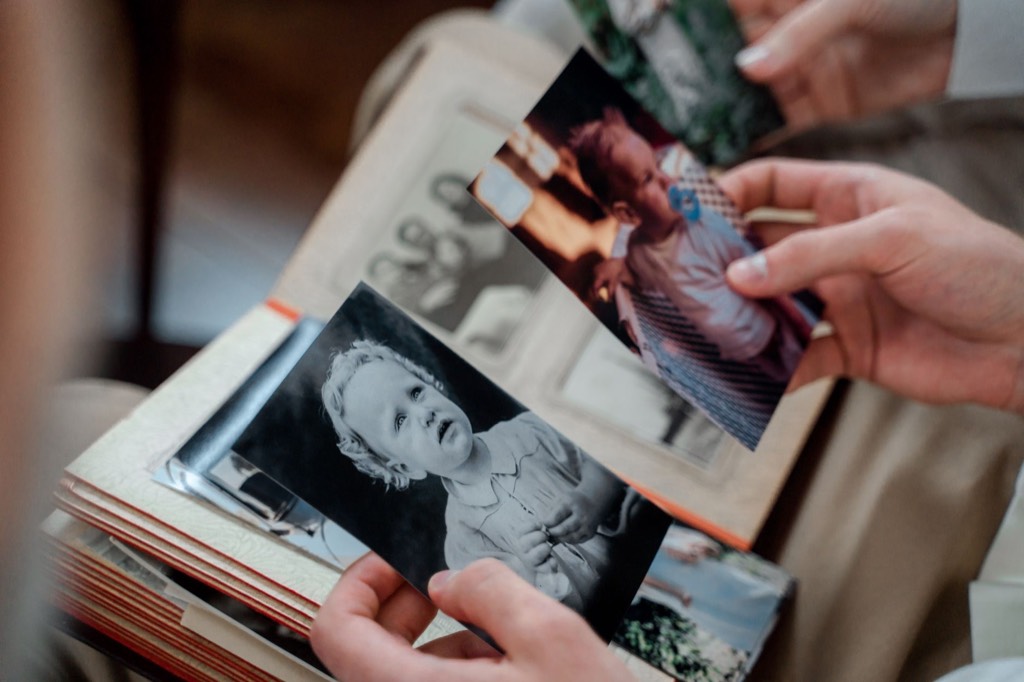
Try to summon your very first memory. Go ahead — the earliest one you’re sure is real. Odds are it lands somewhere around age three or four, and even that one might be a story you were told so many times that it feels like a picture in your head. Almost nobody can reach back to being one year old, learning to walk, being carried around by people who adored them. All of it happened. None of it stuck.
Memory is stranger than we give it credit for. It fails in oddly specific ways, plays tricks that feel like glitches, and does some of its best work while you’re doing nothing at all. Here are eight of its quirks — some settled science, some still argued over. We’ll be honest about which is which.
Why you can’t remember being a baby
Childhood amnesiaThe blank stretch before roughly age three or four has a name: childhood, or infantile, amnesia. It’s near-universal, and it isn’t that nothing happened — babies clearly learn faces, words, and routines. The memories just don’t survive.
Researchers think part of the answer is a hippocampus — the brain’s memory-filing region — that’s still under heavy construction in the first years, busily making so many new neurons that old traces get overwritten. Language and a sense of self may matter too: it’s hard to store an autobiography before you have the words and the “me” to hang it on. That’s the leading picture, though the exact mechanism is still an open question.
How a smell can drop you into the past
The Proust effectCatch a whiff of a particular sunscreen, or a grandparent’s kitchen, and you’re suddenly there — not just remembering it but half-reliving it, with the feelings attached. Sounds and sights rarely hit that hard. Smell does it routinely.
The likely reason is wiring. Smell signals take an unusually direct route into the brain regions tied to emotion and memory, largely skipping the sensory relay station that other senses pass through first. So a scent can reach the emotional, memory-forming parts of your brain almost before you’ve consciously named it — which is why the memories it triggers feel so vivid and so old.
When the word is right there and won’t come
Tip of the tongueYou know the actor. You can picture the movie, the co-star, the era. You know the name starts with a B — and it simply will not arrive. This maddening state even has a formal name: the tip-of-the-tongue phenomenon.
What seems to happen is a partial retrieval: your brain has pulled up the meaning and even some sounds of the word, but the full link to its pronunciation hasn’t connected. It’s a wiring hiccup, not a sign of decay — and it’s why the name so often pops up an hour later, unbidden, once you’ve stopped straining for it.
Why you forget why you walked into the room
The doorway effectYou get up with a clear mission, walk into the kitchen, and — nothing. The purpose evaporated somewhere between the couch and the fridge. You are not losing your mind. You walked through a doorway.
Psychologists have actually studied this, and the leading idea is that passing from one room to another acts like a mental scene change. Your brain files away the old context and starts a fresh one, and the little plan you were holding — “go get the scissors” — gets swept up in the reset. The fix is almost funny: go back to where the thought started, and it often comes right back.
The vivid memory that’s quietly wrong
Flashbulb memoriesAsk someone where they were when they heard about a huge, shocking event, and they’ll often describe the scene in crisp detail — the room, the light, who told them. These are called flashbulb memories, and they come with a powerful sense of certainty.
Here’s the unsettling part: studies that recorded people’s accounts right after such events, then checked back years later, found the stories had drifted — sometimes quite a lot — while the person’s confidence stayed sky-high. The emotion burns in the feeling of accuracy, not the accuracy itself. A memory can feel like a photograph and still be partly fiction.
A memory can feel like a photograph and still be partly fiction. The emotion burns in the certainty, not the accuracy.
How you can remember something that never happened
False memoriesMemory isn’t a recording you play back. Every time you recall something, you rebuild it — and in the rebuilding, details can be added, swapped, or invented, often without you noticing. That’s how false memories form.
In classic experiments, researchers have led people to confidently “remember” events that were gently suggested but never took place. It’s not lying and it’s not stupidity; it’s how a reconstructive memory works. This is also why eyewitness accounts, once treated as gold, are now handled with real caution — a leading question can quietly reshape what someone is sure they saw.
The song that won’t leave your head
EarwormsA chorus loops in your mind for hours, sometimes days, uninvited and unwelcome. These sticky musical fragments are so common they’ve earned a nickname — earworms — and researchers who study them think of them as a kind of involuntary memory getting stuck on repeat.
The catchiest offenders tend to be simple, upbeat tunes with a small surprising twist, and they often surface when your mind is idle or wandering. One thing that reliably helps, oddly, is engaging the same brain machinery elsewhere: chewing gum, or just letting the song finish in your head instead of cutting it off, can loosen the loop.
Why cramming fails and spacing wins
The spacing effectEveryone who’s crammed for a test knows the grim sequel: you pass, then it’s all gone by the weekend. Packing study into one long session gets facts into short-term memory, but they leak out almost as fast as they went in.
Spread the same total study time across days — spaced repetition — and the material sticks dramatically better. Each time you retrieve something after almost forgetting it, you strengthen the trace, a little like re-treading a path so it doesn’t grow over. This is one of the most solid findings in all of memory research. Cramming feels productive; spacing actually works.
And then there’s déjà vu — that jolt of having lived this exact moment before, which we’ve explored on its own elsewhere. It’s worth flagging here for one honest reason: unlike most of the quirks above, science still hasn’t nailed it down. The leading guesses involve a memory system briefly misfiring, tagging a brand-new scene as “familiar,” but there’s no settled answer. It’s a good reminder that memory, for all we’ve learned, still keeps a few of its secrets.
Sources
How much do you remember?
3 quick questions from the story above.
Enjoyed that? Play a full trivia quiz:
Play a Science quiz