We hand out the word “superpower” pretty freely — usually to a movie character in a cape. But some of the most jaw-dropping abilities on Earth belong to animals you could, in theory, meet on a beach, in a pond, or in your own backyard.
These aren’t exaggerations or fish tales. They’re documented, measured, sometimes-baffling facts of biology. Here are eight creatures whose real-life talents put most comic books to shame.
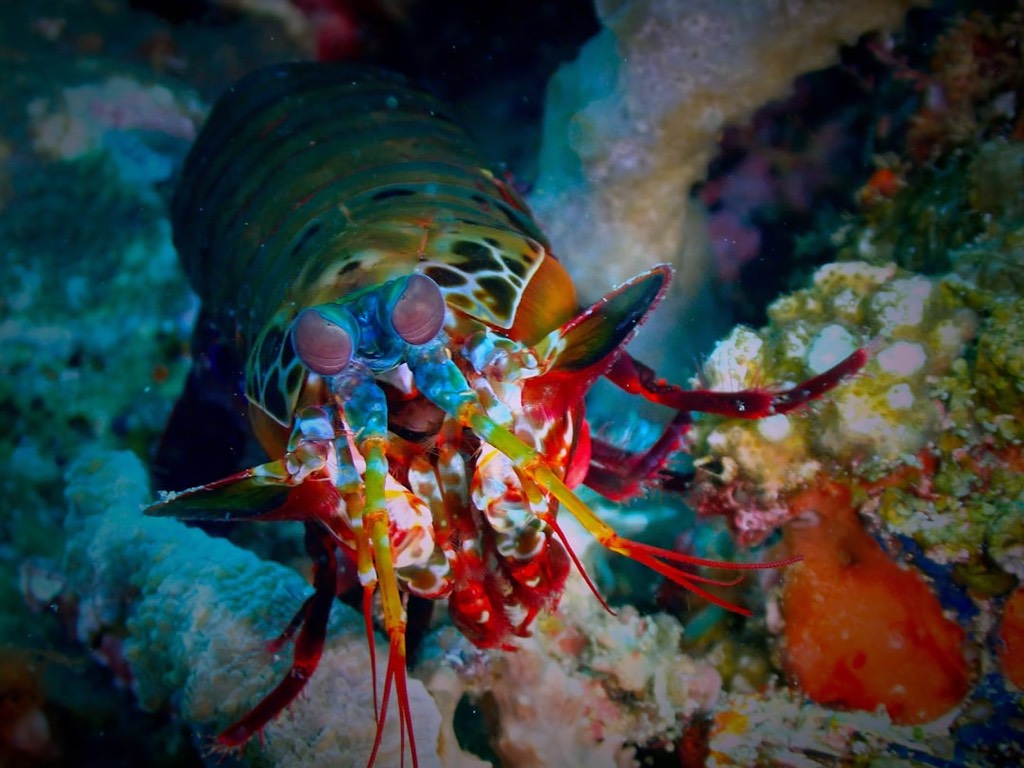
The Mantis Shrimp
A punch like a bulletThe mantis shrimp is a small, gaudy sea creature with one of the fastest movements in the animal kingdom. It cocks its club-like limbs like a loaded spring and strikes so quickly that the water around the blow briefly boils, throwing off a flash of light and a shockwave. The punch can crack a crab shell — or the glass of an aquarium.
Then there are the eyes. Where you and I see color with three types of receptor, some mantis shrimp have around a dozen or more, along with the ability to detect polarized light. It’s a way of seeing the world we can barely imagine, packed into an animal the size of your hand.
The Tardigrade
Nearly indestructibleTardigrades — affectionately called water bears — are microscopic animals that live in moss, soil, and just about everywhere else. Their claim to fame is stubborn survival. When conditions turn deadly, a tardigrade can curl into a dried-out ball called a tun and simply wait, its metabolism all but switched off.
In that state they’ve endured being frozen near absolute zero, boiled, blasted with radiation, and even exposed to the vacuum of open space aboard a satellite — and then walked away, rehydrated, as if nothing had happened. Not bad for a creature you need a microscope to see.
The Axolotl
Grows body parts backThe axolotl is a permanently youthful salamander from the lakes of Mexico, with feathery gills and a face that always looks faintly amused. Its superpower is one humans have dreamed about for centuries: regeneration.
Lose a leg and an axolotl grows a new one, complete with bone, muscle, and nerves — no scar left behind. It can also regrow parts of its heart, jaw, and even portions of its brain and spinal cord. Scientists study it closely, hoping to learn how it does what our own bodies stubbornly cannot.
The Immortal Jellyfish
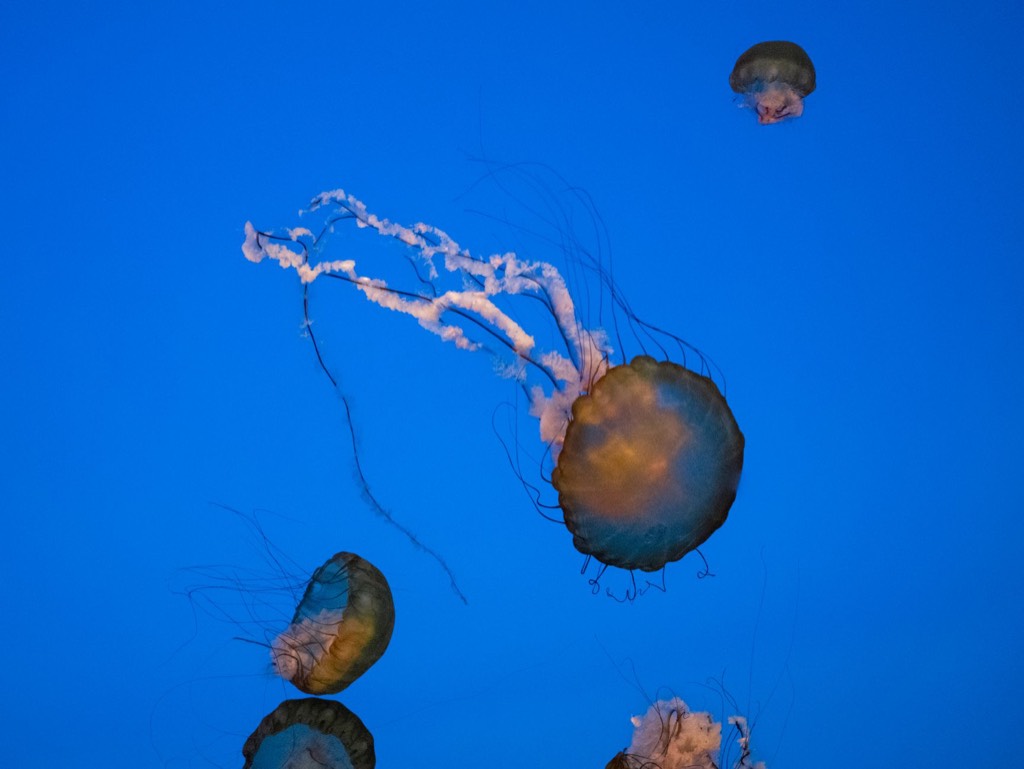
Turns back the clockThere is a tiny jellyfish, Turritopsis dohrnii, no bigger than a fingernail, that has found a loophole in the rules of life and death. When it’s injured, starving, or simply old, it can reverse its own life cycle.
Instead of dying, the adult jellyfish settles down and transforms back into an earlier stage — a little polyp — from which it can grow up all over again. In principle it can repeat this indefinitely, which is why it earned the nickname “the immortal jellyfish.” Predators and disease still get most of them, but on paper, at least, it need never die of old age.
The Electric Eel
A living stun gunThe electric eel of South America — not a true eel, but a kind of knifefish — carries its own power supply. Most of its long body is packed with specialized cells that work like stacked batteries, and it can discharge them all at once.
A big one can deliver a jolt of around 600 volts, enough to stun the fish it hunts and to convince a much larger animal to keep its distance. It even uses gentler electric pulses like a kind of radar, sensing prey in murky water where its eyes are next to useless.
None of this is science fiction. It’s just what happens when evolution has a few hundred million years to tinker.
The Star-Nosed Mole
The fastest eater aliveThe star-nosed mole is a small, nearly blind creature with a startling ring of 22 fleshy tentacles around its snout. That “star” isn’t for smelling — it’s a touch organ, one of the most sensitive ever found, letting the mole feel its way through pitch-dark tunnels at incredible speed.
The result is a genuine world record. A star-nosed mole can find a morsel of food, decide it’s edible, and gulp it down in about a quarter of a second — faster than the human eye can follow. It is, as far as anyone has measured, the fastest-eating mammal on Earth.
The Lyrebird
Mimics almost any soundThe superb lyrebird of Australia is a shy, ground-dwelling songbird with an almost supernatural talent for imitation. Males build a repertoire of sounds to impress mates, and they’re not fussy about the source.
A lyrebird will faithfully reproduce the calls of other birds, but it doesn’t stop there. Wild ones have been recorded copying camera shutters, car alarms, chainsaws, and even the crackle and beep of a construction site — stitching the whole medley together in a performance so convincing you’d swear the machines were right there in the forest.
The Arctic Ground Squirrel
Freezes and livesWinter in the Arctic is no joke, and this little squirrel handles it in a way that sounds impossible. During its long hibernation, it lets the temperature of its body drop below the freezing point of water — colder than any other known mammal.
Its blood chills to below zero without actually turning to ice, a trick called supercooling. Its heart slows to a few beats a minute, and its brain activity nearly flatlines. Then, every few weeks, it briefly warms itself back up before cooling down again — surviving a season that would kill almost anything else.
What gets me about all of this is that these animals aren’t rare exceptions hidden in some far corner of the planet. They’re right here, sharing the world with us — a punch faster than a blink, a creature that survives space, a body that grows itself back. The next time someone tells you the age of wonders is over, point them toward a pond.
Sources
How much do you remember?
3 quick questions from the story above.
Enjoyed that? Play a full trivia quiz:
Play a Science quiz