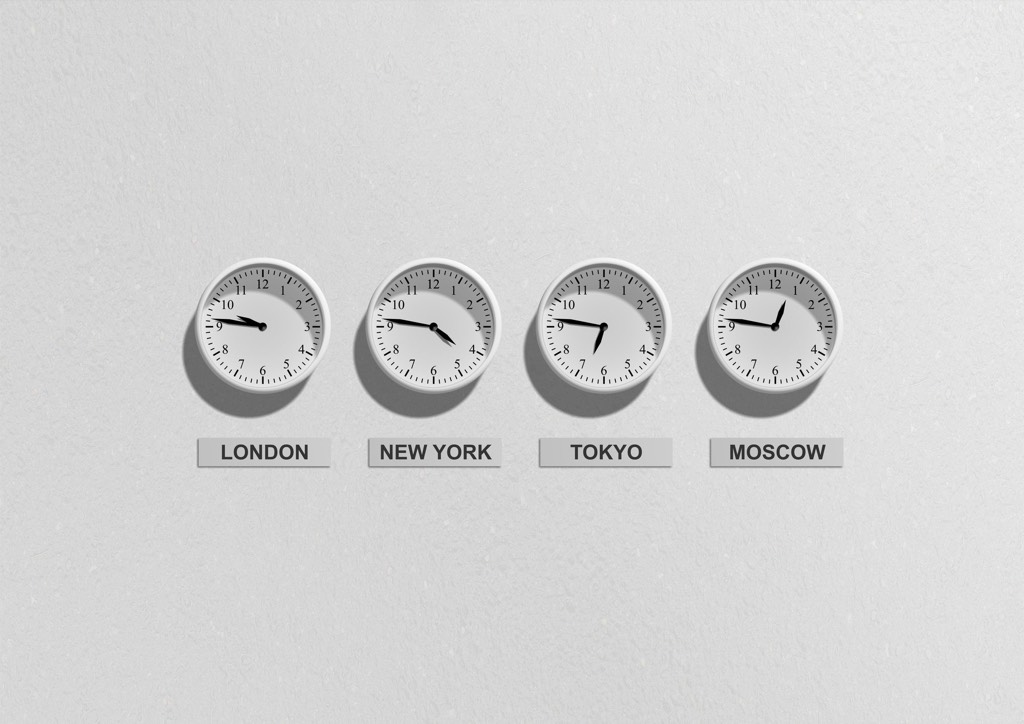
Here’s something we almost never stop to think about. When it’s nine in the morning where you are, it’s the middle of the night somewhere else, and the whole planet has quietly agreed on exactly how far off each place should be. Nobody’s clock is “right” and everyone else’s “wrong” — we just decided, together, where the lines go.
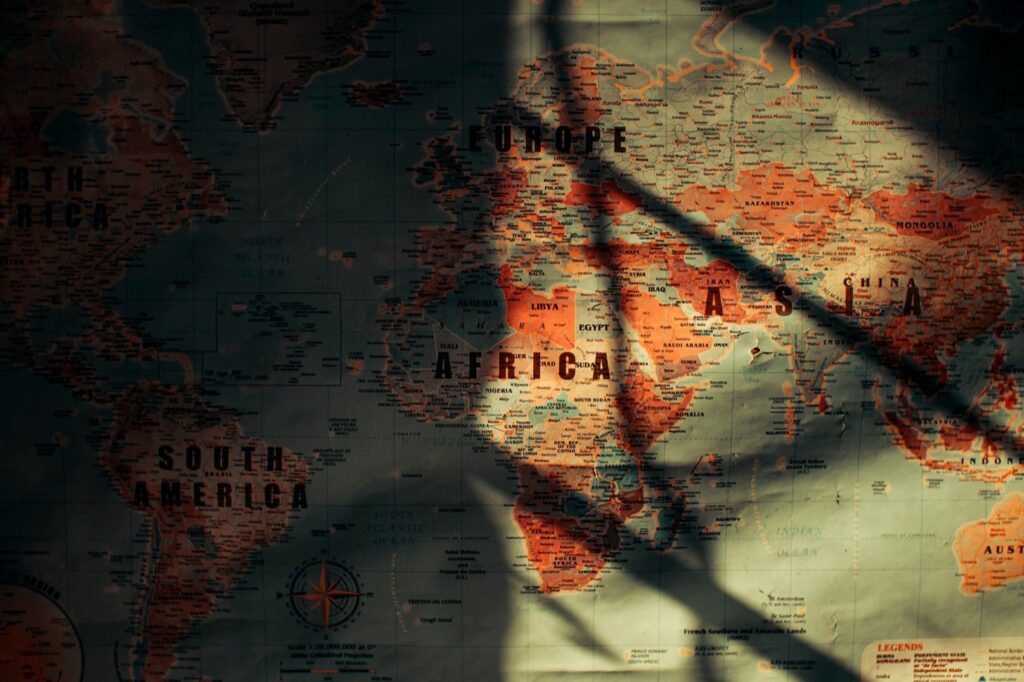
But it wasn’t always like that. For most of human history, time was a local, homemade thing. The story of how we untangled it involves runaway train schedules, a stubborn Canadian engineer, and a room full of diplomats in Washington arguing over a line on a map.
Every town kept its own time
Before the railways, your town’s clock was set by the sun. When it stood highest in the sky, that was noon — and since the sun crosses the sky at its own pace, noon in one town arrived a few minutes before or after noon in the next one over. A city clock, often on the church or courthouse, was the local authority, and everybody set their pocket watches by it.
It worked fine for centuries, mostly because it didn’t matter. If your neighbor’s town was eight minutes behind yours, so what? You’d get there when you got there. Nobody was trying to catch anything that left at a precise moment. That comfortable vagueness was about to run headlong into a machine that cared a great deal about precise moments.
The railways turned that into chaos
Trains changed everything, because a train runs on a timetable, and a timetable needs everyone to agree on what time it is. But a single rail line might pass through dozens of towns, each keeping its own slightly different local time. Whose noon does the schedule use? Pittsburgh alone was reportedly juggling several different times at once, depending on which railroad you asked.
The result was a mess that ranged from confusing to genuinely dangerous. Two trains running on two different local times could end up on the same track expecting to be in different places. Printed guides tried to list all the local variations, and passengers needed a small talent for arithmetic just to make a connection. Something had to give.
One engineer had a bigger idea
Enter Sir Sandford Fleming, a Scottish-born Canadian engineer who’d helped build the railway across Canada. As the story goes, he once missed a train in Ireland because a printed schedule confused its times, and it left him convinced the whole planet needed to get its act together. In 1879 he laid out a plan to the Royal Canadian Institute: divide the world into standard zones, each an hour apart, all anchored to a single global reference.
It was a genuinely radical thought. Fleming wasn’t just tidying up train schedules in one country — he was proposing that the entire world share one framework for time. He spent years pushing the idea to anyone who would listen, and slowly the people who ran the railways came around.
Fleming wasn’t just fixing train schedules. He was asking the whole planet to agree on what time it is.
The Day of Two Noons
The railroads acted first, without waiting for governments. On Sunday, November 18, 1883, the railways of the United States and Canada switched over to a shared system of standard time zones. In many places clocks were nudged forward or back to line up with the new zone time, so noon effectively happened twice that day — which is why the papers called it “the Day of Two Noons.”
It’s worth sitting with how strange that must have felt. One afternoon, on the say-so of the railroad companies rather than any law, a good chunk of the continent simply agreed to reset its clocks. People grumbled, some towns held out for years, but the convenience was undeniable, and the new time stuck.
Greenwich wins the world
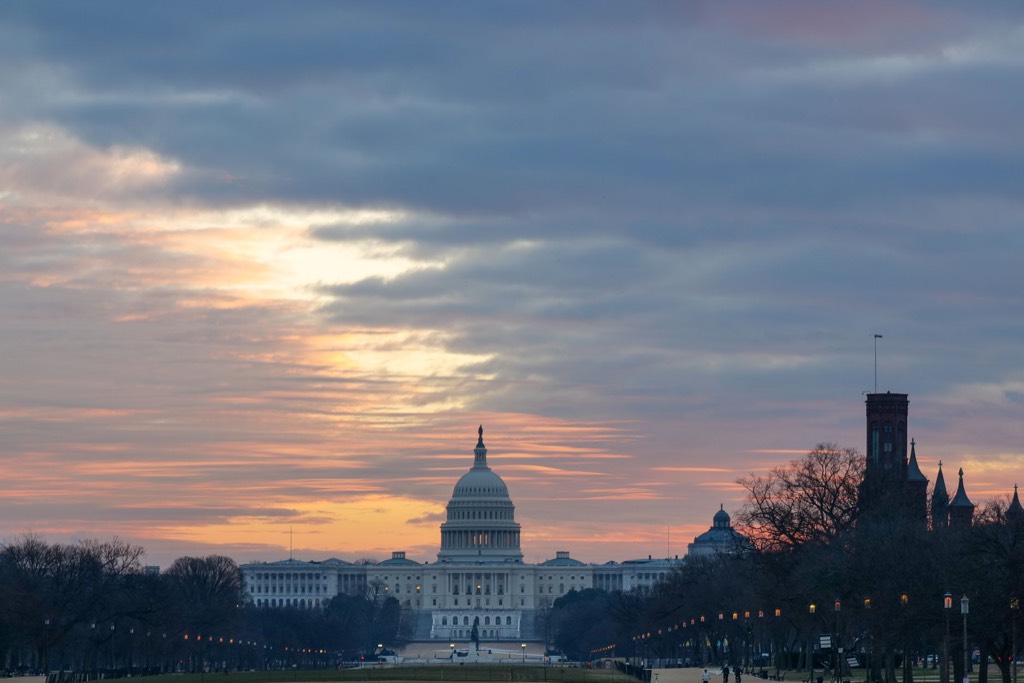
The railroads had sorted out North America, but the globe still needed a starting line — a single meridian everyone could measure from. So in October 1884, delegates from 26 nations gathered in Washington, D.C. for the International Meridian Conference. On October 22 they voted to make the meridian running through Greenwich, England, the world’s prime meridian: zero degrees longitude, the place where the day begins to be counted. Greenwich won largely because most of the world’s ships were already navigating by it.
Not everyone was thrilled. France, which rather fancied Paris for the honor, abstained, as did Brazil, and clung to Paris time for decades. But the decision held. From that line, the modern grid of roughly 24 time zones fans out around the globe, one hour per zone as you go. Directly opposite Greenwich runs the International Date Line, the ragged seam in the Pacific where you cross from one calendar day into the next. And a handful of places — India, parts of Australia, Newfoundland — decided a full hour didn’t quite fit their geography, so they set their clocks a half-hour (or in a few cases 45 minutes) off from their neighbors. The lines, it turns out, were never purely about the sun. They were about people agreeing where to draw them.
So the next time your phone quietly resets itself as you step off a plane, spare a thought for how much argument and invention it took to make that little jump feel like nothing at all. We built the day we live by — one meridian, one timetable, one slightly chaotic Sunday at a time.
Frequently asked questions
Why do we have time zones?
Before the railways, every town set its clock by the sun, so noon arrived a few minutes apart from town to town. Train timetables needed everyone to agree on the time — two trains on two different local times could end up on the same track — so standardized zones were adopted to end the chaos.
Who invented time zones?
The push came mainly from the railways. The Canadian engineer Sandford Fleming championed a worldwide system of standard zones, and it was hammered out by delegates at the 1884 International Meridian Conference in Washington, which also fixed the prime meridian at Greenwich.
How did towns keep time before time zones?
Each town kept its own "sun time" — noon was the moment the sun stood highest — set by a central clock on the church or courthouse. A neighboring town being eight minutes behind simply didn't matter until trains made precise timing a matter of safety. It was part of the same long effort to make our clocks and calendar agree with the sky.
Sources
How much do you remember?
3 quick questions from the story above.
Enjoyed that? Play a full trivia quiz:
Play a Geography quiz