History, you might think, rolls forward with a kind of inevitability—as though the United States you know today was always the destination. But spend a little time with the actual documents, the diaries, the cables sent in the dead of night, and that comfortable certainty starts to dissolve. The past is full of moments when the whole story could have gone another way.
Each of the eight episodes below hinged on something small: a patch of river fog, a soldier’s carelessness with a piece of paper, a telephone call made in secret. What strikes you, reading them now, is not how fragile the republic was—it’s how many times it was saved by sheer luck.
Washington’s Midnight Escape
Fog saves an armyOn the night of August 29, 1776, George Washington had roughly 9,000 exhausted soldiers trapped on the western tip of Long Island. The British had routed them two days earlier at the Battle of Brooklyn, and the East River sat behind them, with the Royal Navy waiting just offshore. There was nowhere to go. Then, as if ordered, a dense fog rolled in off the harbor and held until after sunrise—long enough for Washington to ferry every last man across to Manhattan in silence. British scouts who arrived at the empty shoreline at dawn found nothing but campfires still burning.
If that fog had lifted an hour earlier, the Revolution might have ended on a muddy Brooklyn riverbank. Washington himself described the escape as a “peculiar blessing of Providence.” It wasn’t the last time the weather would take a side in American history—but it may have been the most consequential.
The Vote New York Sat Out
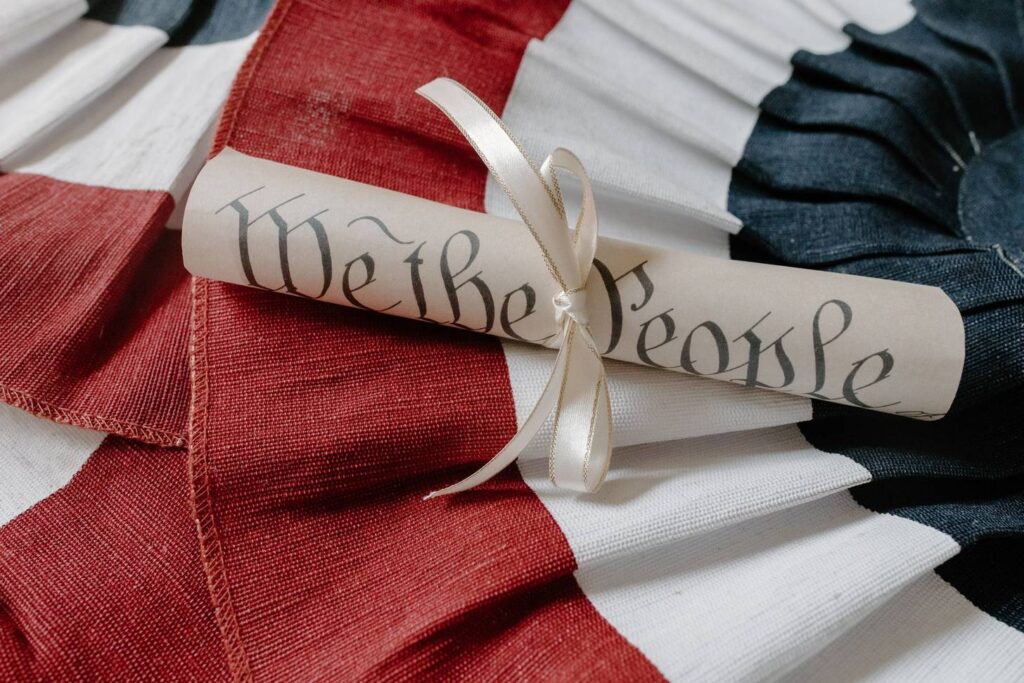
Twelve of thirteenYou know July 4th as the day the Declaration of Independence was adopted. What most people don’t know is that only twelve of the thirteen colonies voted yes. New York’s delegation abstained—not out of opposition, but because they were still waiting for instructions from Albany. The vote passed anyway, but “the unanimous Declaration” printed on the document was technically not unanimous on the day it happened.
New York’s newly elected provincial congress ratified the Declaration on July 9, and the phrase “unanimous” was finally accurate. But for five days, the new republic announced itself to the world on shaky footing. It’s a reminder that even the most stirring founding documents got to the finish line by the skin of their teeth.
The Convention That Almost Collapsed
One vote to surviveBy late June of 1787, the Constitutional Convention in Philadelphia was on the verge of breaking apart. Delegates from large states wanted congressional seats based on population; delegates from small states insisted on equal representation. Neither side would move. Delaware’s Gunning Bedford threatened that the small states might seek “some foreign ally of more honor and good faith”—a barely veiled hint at approaching Britain or France. Benjamin Franklin called for daily prayers to steady the room.
The solution—a bicameral Congress, with a population-based House and an equal-representation Senate—passed by the thinnest of margins on July 16. Connecticut delegates Roger Sherman and Oliver Ellsworth had proposed it; historians ever since have called it the Great Compromise. Without it, there might have been no Constitution at all, only thirteen separate and squabbling republics arguing over trade and debts.
The Bitterroots Almost Win
Eleven days of near-deathIn September 1805, the Lewis and Clark Expedition crossed the Bitterroot Mountains in what is now northern Idaho—and nearly didn’t make it out. The men had underestimated everything: the altitude, the duration, the cold. After eleven days in the peaks, they were eating their pack horses. Their Lemhi Shoshone guide, called Old Toby in the journals, admitted he had lost the trail. Snow fell in September. Sergeant Patrick Gass wrote that the road was “the most terrible mountains I ever beheld.”
The Corps of Discovery stumbled out of the mountains near-starved and frostbitten, saved in the end by the Nez Percé people, who fed them and helped them build canoes for the Columbia River. Had the Nez Percé been hostile—or had the expedition pushed deeper without help—Thomas Jefferson’s dream of a route to the Pacific might have vanished somewhere in those Idaho ridges.
Lee’s Battle Plan Blows Across a Field
Three cigars, one catastropheOn September 13, 1862, soldiers from the 27th Indiana Volunteer Infantry, making camp near Frederick, Maryland, found a sealed envelope lying in the grass. Inside were three cigars wrapped in paper—and the paper turned out to be a copy of Robert E. Lee’s Special Orders No. 191, detailing exactly where every Confederate division was headed. It reached General George McClellan that afternoon. He reportedly said: “Here is a paper with which if I cannot whip Bobby Lee, I will be willing to go home.”
McClellan had Lee’s entire plan in his hands—and still failed to act quickly enough. At Antietam four days later, the bloodiest single day in American military history, McClellan halted rather than pursued the retreating Confederate army. The Lost Order did stop Lee’s Maryland invasion, and gave Lincoln the momentum he needed to announce the Emancipation Proclamation. It could have ended the war. Instead, it shortened it by a chapter.
Lincoln Writes His Own Political Obituary
Exceedingly probableOn August 23, 1864, Abraham Lincoln sat down and wrote a memo he expected would be read after his defeat. “This morning,” it began, “as for some days past, it seems exceedingly probable that this Administration will not be re-elected.” He folded it, sealed it, and had each of his cabinet members sign the outside without reading it. He called it his “blind memorandum.” Even Thurlow Weed, one of his own stalwart supporters, wrote to Secretary Seward that Lincoln’s re-election was “an impossibility.”
Six days later, Union General William Sherman captured Atlanta. The mood in the North shifted almost overnight. Lincoln won in November by a landslide. He opened the sealed envelope to his cabinet after the election and read the memo aloud—a wry testament to how completely the situation had reversed. Had Atlanta held through the fall, a Democratic administration might have negotiated a peace that preserved slavery and split the nation permanently.
Thirteen Days That Nearly Ended Everything
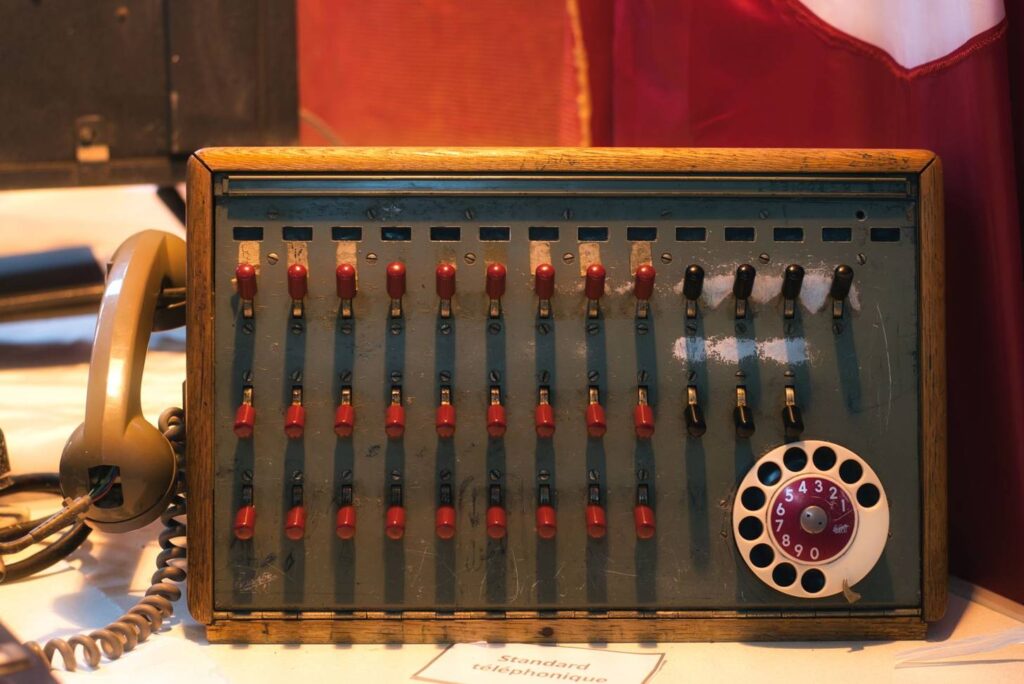
The vote that saved the worldThe Cuban Missile Crisis gets taught as a tense standoff between President Kennedy and Soviet Premier Khrushchev—a contest of wills resolved by diplomacy. What that version leaves out is how close it actually came to nuclear war, and how much of the resolution happened in back channels the public never heard about. Attorney General Robert Kennedy met secretly with Soviet Ambassador Anatoly Dobrynin to offer a quiet deal: Soviet missiles out of Cuba, American Jupiter missiles out of Turkey—but the Turkey part could never be made public.
Then there was October 27—“Black Saturday.” A Soviet submarine, cut off from communications and under depth-charge attack by U.S. destroyers, was preparing to launch a nuclear torpedo. Its commander believed war had already started. Only the intervention of Vasili Arkhipov, the flotilla commander aboard the sub, prevented the launch—under the vessel’s rules, all three senior officers had to agree to fire, and Arkhipov voted no. The sub surfaced. That single refusal may be the closest the world has ever come to nuclear war.
A Lifeboat 200,000 Miles From Home
The successful failureOn April 13, 1970, astronauts Jim Lovell, Jack Swigert, and Fred Haise were 200,000 miles from Earth when Swigert completed a routine procedure and the spacecraft shuddered. An oxygen tank in the service module had exploded, taking out two of three fuel cells. The moon landing was cancelled. The three men crowded into the Lunar Module—a spidery vehicle designed for two people for two days—and began the long journey home using it as a lifeboat.
For four days, flight controllers and engineers improvised solutions to problems that had no manual: how to stretch power meant for 45 hours to last 90, how to scrub carbon dioxide using square cartridges designed for a round-hole system—using nothing but materials already aboard. The crew splashed down safely on April 17. NASA flight director Gene Kranz, who had famously declared “failure is not an option,” later called it “our finest hour.” If any one of a dozen improvised fixes had failed, three men would have died quietly between the Earth and the Moon.
What you notice, looking back at these eight moments, is not a story of inevitable American destiny—it’s a story of contingency. Fog. A wrong turn. A found envelope. One man’s refusal on a submarine. History moved the way it did because someone happened to be in the right place, or the weather changed, or one person said no to something catastrophic. The republic you live in today wasn’t guaranteed. It was improvised, fought over, and—more than once—barely saved.
Frequently asked questions
Was the Declaration of Independence actually signed on July 4th?
Most delegates did not sign the Declaration on July 4, 1776—that date marks when Congress adopted the final text. The formal signing ceremony took place on August 2, 1776, when a clean parchment copy was ready. New York’s delegation didn’t ratify the document until July 9, which is why the phrase “unanimous Declaration” was technically inaccurate for the first five days.
Did the Apollo 13 astronauts actually say “Houston, we have a problem”?
The famous line is a Hollywood paraphrase. Jack Swigert’s real transmission on April 13, 1970 was “Houston, we’ve had a problem,” using the past tense, and Commander Jim Lovell repeated it the same way moments later. The 1995 film changed it to the present tense for dramatic effect, and the movie version has largely replaced the original in popular memory. History has a way of getting polished over time—much like our look at why eleven days simply disappeared from the calendar in 1752.
What other ancient turning points were shaped by chance or near-misses?
The ancient world had its own extraordinary pivot points, from Athens’ survival at Marathon to Rome’s near-collapse under Hannibal. Readers who enjoy these “what if” stories may find our piece on the Seven Wonders of the Ancient World a fascinating look at how easily great civilizations can leave—or lose—their mark. The Romans in particular were masters of surviving disaster, as explored in 9 ancient Roman inventions we still use today.
How close did the Lewis and Clark Expedition really come to failing?
Very close, on at least two occasions. The Bitterroot crossing in September 1805 nearly killed the expedition outright—they ran out of food, lost the trail, and endured early snowfall in peaks that took eleven days to cross. The Nez Percé people’s decision to feed and assist the Corps of Discovery was arguably what kept Jefferson’s grand western survey alive. The story is a reminder that exploration has always depended on the generosity of those who already knew the land—a theme also visible in the long reach of ancient Egyptian ingenuity.
Sources
How much do you remember?
3 quick questions from the story above.
Enjoyed that? Play a full trivia quiz:
Play a History quiz