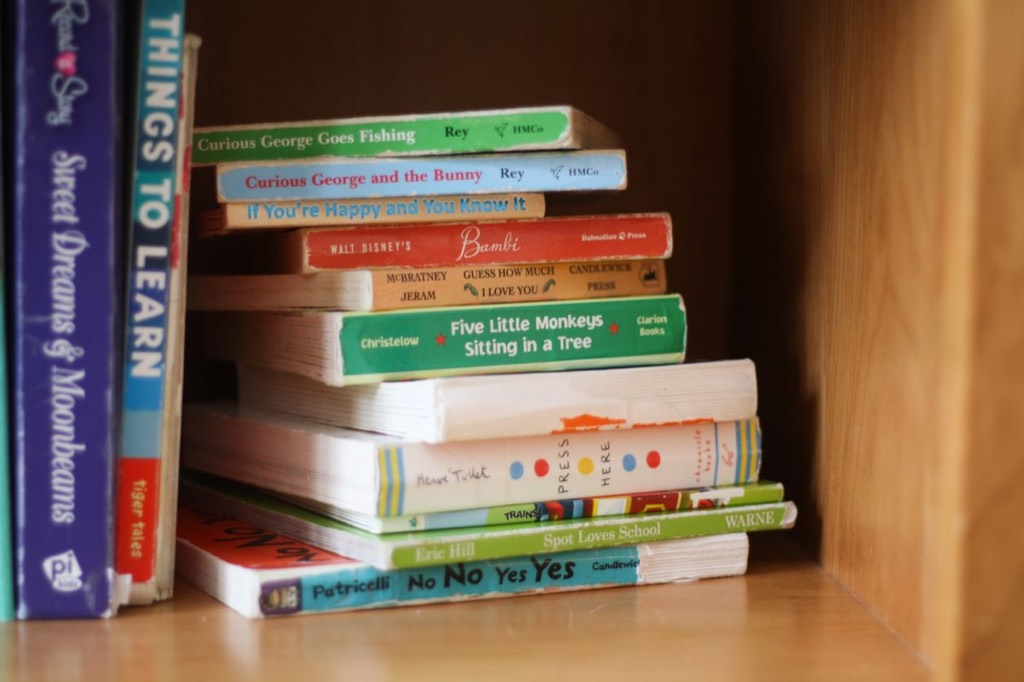
You can probably still recite half a dozen of these from memory, decades after anyone read them to you. Nursery rhymes have a way of sticking around. So do the stories people tell about where they came from — that this one is really about the plague, that one about a beheaded queen.
Some of those origin stories are true. A surprising number are not. Here’s the real history behind eight rhymes you grew up with — and an honest word about which tales to take with a grain of salt.
Ring Around the Rosie
Not about the plagueYou’ve almost certainly heard that this one is a coded description of the Black Death — the “rosie” a rash, the “ashes” the burning of bodies. It’s a great story, and it’s almost certainly false.
Folklorists point out that the rhyme doesn’t appear in print until the 1880s, centuries after the plague, and that its early versions don’t match the grim reading at all. The plague explanation seems to have been invented much later — proof of how easily a good, spooky story spreads.
Mary Had a Little Lamb
A true storyHere’s one where the tidy origin story actually holds up. There really was a Mary — Mary Sawyer, a girl in Massachusetts who followed her pet lamb to school one day in the early 1800s, to the delight of her classmates.
The poem was published in 1830 by Sarah Josepha Hale. Decades later it became one of the first things ever recorded on Thomas Edison’s phonograph — which means “Mary Had a Little Lamb” was among the first human speech ever captured on a machine.
Twinkle, Twinkle, Little Star
Actually a poemThis one began as a real piece of literature. It comes from a poem called “The Star,” written by an English woman named Jane Taylor and published in 1806. The version we sing is only the first verse — there are several more that almost nobody knows.
The tune, by the way, is the same one used for the alphabet song and “Baa, Baa, Black Sheep.” All three borrowed an old French melody.
Humpty Dumpty
Nobody ever said he was an eggRead the actual rhyme and you’ll notice something: it never once says Humpty Dumpty is an egg. We only picture him that way because of later illustrations, especially in Through the Looking-Glass.
A popular legend claims he was a large cannon in the English Civil War that fell from a wall. Historians can’t find any real evidence for it, so enjoy the story — just don’t repeat it as fact.
Some of these origin stories are true. A surprising number were invented long after the fact.
Baa, Baa, Black Sheep
The wool-tax theoryYou may have read that this rhyme is a complaint about a medieval tax on wool, with “the master” and “the dame” standing in for the king and the church. It’s a tidy explanation that gets passed around a lot.
The honest truth is that there’s no solid evidence for it. The rhyme is old — printed by the 1740s — but the tax story looks like a later guess dressed up as history.
London Bridge Is Falling Down
Take your pick of theoriesWas it about a Viking attack that pulled the bridge down? About the bridge simply wearing out over centuries? About the old, dark idea of burying a person in the foundations to keep a structure standing? People have argued for all three.
The truthful answer is that no one really knows. What we do know is that London’s bridge genuinely did fall, burn, and get rebuilt many times — so the rhyme had plenty of real history to draw on.
Mary, Mary, Quite Contrary
A queen, maybeOne well-worn theory says the “Mary” here is Queen Mary I of England, with the “garden” as a graveyard and the “silver bells” as instruments of her reign. Another points to Mary, Queen of Scots.
Both are guesses made long after the fact, with no firm proof behind them. It’s a good example of how we love to attach a famous name to a mysterious little verse.
Rock-a-bye Baby
A gentle song with a startling endingFor a lullaby, the words are surprisingly alarming — a cradle in a treetop that comes crashing down. Theories about its meaning range from a comment on royal succession to a description of how settlers rocked babies in birch branches.
As with so many of these, none of the explanations can be proven. It endures anyway, because the tune is soothing and the words, thankfully, are quickly forgotten by the sleeping child.
If there’s a lesson here, it’s a gentle one about stories themselves. We can’t resist giving a mysterious old rhyme a secret history — a plague, a queen, a hidden protest. Sometimes we’re right. More often, the rhyme is simply old, and the good story came later.