We spend most of our lives in the comfortable middle of things — mild weather, gentle ground, water that comes out of a tap. It’s easy to forget that the same planet has corners so extreme they barely seem to belong here at all. Places where the air runs out, where it hasn’t rained in living memory, where the cold could kill you in minutes.
Here are seven of Earth’s record-holders — the highest, the deepest, the driest, and the rest. Every number below is real, and most of them are stranger than you’d guess.
The Highest Mountain
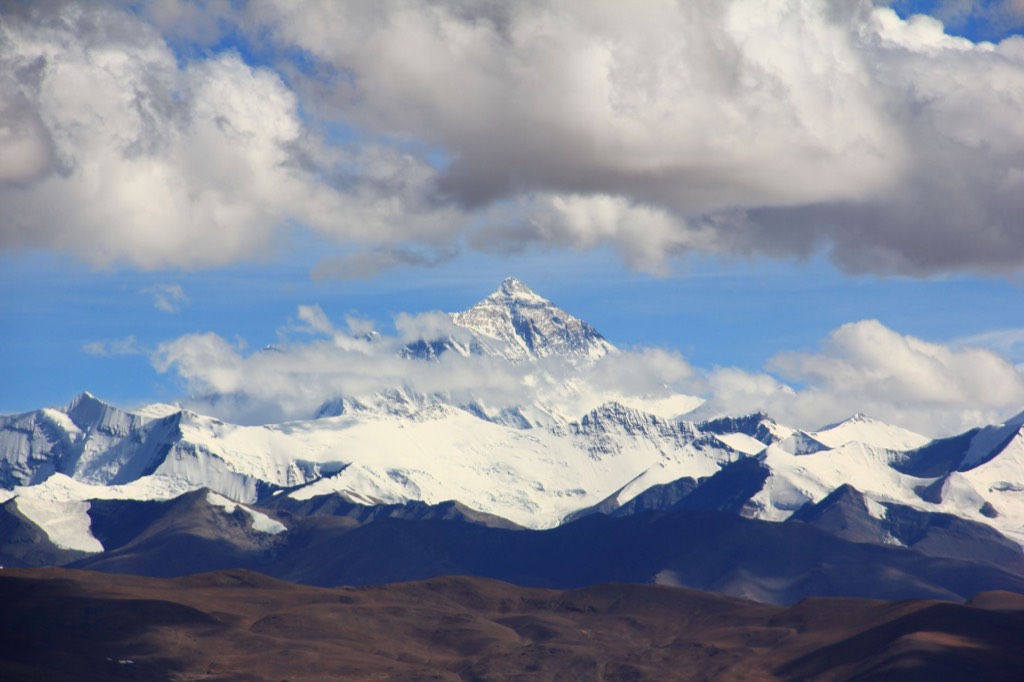
the recordMount Everest tops out at 8,849 meters — about 29,032 feet — where the air holds barely a third of the oxygen you’re breathing right now. Climbers call the zone above 8,000 meters the “death zone,” because your body slowly shuts down no matter how fit you are. It is, by the usual measure, the highest point on Earth.
But “highest” hides a couple of great arguments. Measured from its base on the seafloor, Hawaii’s Mauna Kea is actually the tallest mountain, over 10,000 meters from foot to summit. And because Earth bulges at the equator, the peak of Ecuador’s Chimborazo — not Everest — is the point on the surface that sits farthest from the center of the planet. Three different mountains, three different kinds of “tallest.”
The Deepest Ocean
the recordAt the bottom of the Mariana Trench in the western Pacific lies Challenger Deep, roughly 10,935 meters down — nearly 11 kilometers of water overhead. Drop Everest into it and the summit would still be more than 2 kilometers underwater.
The pressure down there is over a thousand times what you feel at sea level, enough to crush most submarines like a soda can. Only a handful of people have ever reached the bottom — fewer than have walked on the Moon — and yet, incredibly, life is still down there: shrimp-like creatures scuttling through the dark at the very floor of the world.
The Driest Place
the recordChile’s Atacama Desert is so dry that some of its weather stations have never recorded a drop of rain. Parts of it get less than a millimeter a year, and the ground is so barren and Mars-like that NASA has used it to test rovers before sending them to another planet.
It has a rival, though, in an unlikely spot. The McMurdo Dry Valleys of Antarctica — swept by fierce, moisture-stealing winds — are thought to be among the driest places on the planet, some of them likely untouched by rain for millions of years. The driest place on Earth, it turns out, might be buried in the coldest continent.
The Hottest Recorded
the recordOn July 10, 1913, a thermometer at Furnace Creek in California’s Death Valley hit 56.7°C — that’s 134°F. More than a century later, it still stands as the highest air temperature ever reliably recorded on Earth.
The name fits. Death Valley sits below sea level, hemmed in by mountains that trap the heat like a lid on a pot, and in summer the ground can get hot enough to cook an egg. It’s a strange thought that the hottest place we’ve ever measured is a short drive from a national park visitor center, gift shop and all.
Drop Everest into the deepest ocean and its summit would still be more than two kilometers underwater.
The Coldest Recorded
the recordNow swing to the other extreme. At Russia’s Vostok Station in the heart of Antarctica, on July 21, 1983, the temperature fell to −89.2°C — around −128°F. That’s the coldest air temperature ever measured with a thermometer at ground level.
It’s hard to picture what that even means. At that temperature a cup of boiling water tossed into the air freezes before it lands, and breathing without protection would damage your lungs. Satellites have since spotted spots on the Antarctic plateau that may run even colder — pushing toward −94°C — but Vostok still holds the record for a reading taken the old-fashioned way.
The Wettest Place
the recordIn the hills of northeastern India, two neighboring towns trade the title of wettest place on Earth. Mawsynram and Cherrapunji each soak up around 11,000 to 12,000 millimeters of rain a year — roughly 40 feet of water, most of it dumped during the monsoon.
The numbers get almost silly. Cherrapunji once caught nearly 26 meters of rain in a single year in the 1860s, a record that still stands. People there build bridges by training the roots of living trees across the rivers, because anything else would simply rot away in the endless damp.
The Lowest Land
the recordThe lowest dry land on the planet is the shore of the Dead Sea, between Israel and Jordan, sitting roughly 430 meters below sea level — and it keeps dropping a little each year as the water shrinks.
The sea itself is nearly ten times saltier than the ocean, so dense that you can lie back and float on it like a cork without even trying. Nothing much lives in it — hence the name — but people have come here for thousands of years to bob in water that won’t let them sink, at the lowest place a person can stand outdoors on Earth.
What gets me about all this isn’t just the numbers, staggering as they are. It’s that all seven of these places exist on the same ordinary planet you’re sitting on right now — the highest and the deepest, the driest and the wettest, the hottest and the coldest, all part of the same restless, remarkable world. You don’t have to visit them to feel a little smaller, and a little luckier, for living somewhere in the gentle middle.
Sources
How much do you remember?
3 quick questions from the story above.
Enjoyed that? Play a full trivia quiz:
Play a Geography quiz