We tend to walk past even the most famous paintings the way we walk past a familiar face — a quick glance, a nod of recognition, done. But the old masters were patient people, and they hid things. A signature scrawled like graffiti. A skull you can only see from the side. A whole royal couple tucked into a mirror the size of a coin.
None of these are secret codes or conspiracy theories. They’re details that have been sitting there in plain sight for centuries, waiting for you to slow down and look. Here are six worth stopping for.
The Arnolfini Portrait
Jan van EyckDead centre of this 1434 painting, on the back wall between the couple, hangs a small round mirror. Lean in and its convex glass shows the whole room bent around itself — including the backs of the two figures and, astonishingly, two more people standing in the doorway where you are. One of them may well be the painter.
Just above the mirror, van Eyck wrote on the wall in looping Latin script: Johannes de eyck fuit hic — “Jan van Eyck was here.” Not signed in a corner like a modest craftsman, but announced across the room like a tag. It’s one of the boldest signatures in all of Western art, and once you’ve spotted it you can’t unsee it.
The Creation of Adam
MichelangeloYou know the image even if you’ve never looked up at the Sistine Chapel ceiling: God reaching toward Adam, their fingers nearly touching. But look at the shape God floats in — that billowing red cloak, packed with angels. In 1990 a physician named Frank Meshberger pointed out that its outline matches a cross-section of the human brain, folds and stem and all.
The reading is seductive: at the very moment God gives Adam life, he’s wrapped in the organ of thought. It’s worth being honest, though — this is a popular interpretation, not a proven fact. Michelangelo left no note about it, and others see a womb, or just drapery. Michelangelo did dissect corpses and knew anatomy cold, which is why the idea won’t quite go away.
Las Meninas
Diego VelázquezVelázquez painted himself right into this one — standing at a tall canvas on the left, brush in hand, staring out at you. That alone is a quiet act of nerve for a court painter in 1656. But the real trick is smaller and easy to miss.
On the back wall, among the dim paintings, there’s a mirror. In it, faint and glowing, are the King and Queen of Spain. They’re not in the room — or rather, they’re standing exactly where you are, being painted. In one stroke Velázquez puts the royal couple, the viewer, and himself in the same impossible spot. Art historians have argued about what it means for four hundred years, and still do.
They’ve been sitting there in plain sight for centuries, waiting for you to slow down and look.
The Ambassadors
Hans Holbein the YoungerTwo wealthy men stand surrounded by the finest things of 1533 — globes, instruments, books. And then there’s that strange grey smear floating across the floor at their feet. Face-on it looks like a smudge, a flaw, a bit of damage. It isn’t.
Step to the right of the painting and look back along its surface, and the smear snaps into focus: a perfectly drawn human skull. The technique is called anamorphosis, and Holbein used it as a memento mori — a reminder that under all the wealth and cleverness, death is in the room too. You have to move your body to see it, which is exactly the point.
The Last Supper
Leonardo da VinciEveryone knows the drama of this one — the moment Christ says one of them will betray him, and the table erupts. But Leonardo told the story in the hands. Look for Judas: he’s the one clutching a small bag, the payment for the betrayal, and his elbow has knocked over the salt.
Spilled salt was a bad omen in Leonardo’s day, a broken bond — a tiny, loaded detail sitting right in front of the traitor. Nearby, notice a hand gripping a knife along the table, tucked awkwardly behind the others. It belongs to Peter, foreshadowing the blade he’ll draw at Christ’s arrest. Once you’re watching the hands, the whole painting starts to whisper.
Nighthawks
Edward HopperHopper’s 1942 late-night diner is one of the loneliest pictures ever painted, and most people feel it long before they figure out why. Here’s part of the reason: look all the way around that big curved wall of glass. There’s no door.
No way in, no way out — just four people sealed under a hard fluorescent glow while you stand on the dark street, unable to reach them. Hopper never explained whether it was a deliberate symbol or simply how the composition fell together, so nobody can say for certain. But absent that door, the diner feels less like a refuge and more like a fishbowl, and the loneliness has nowhere to go.
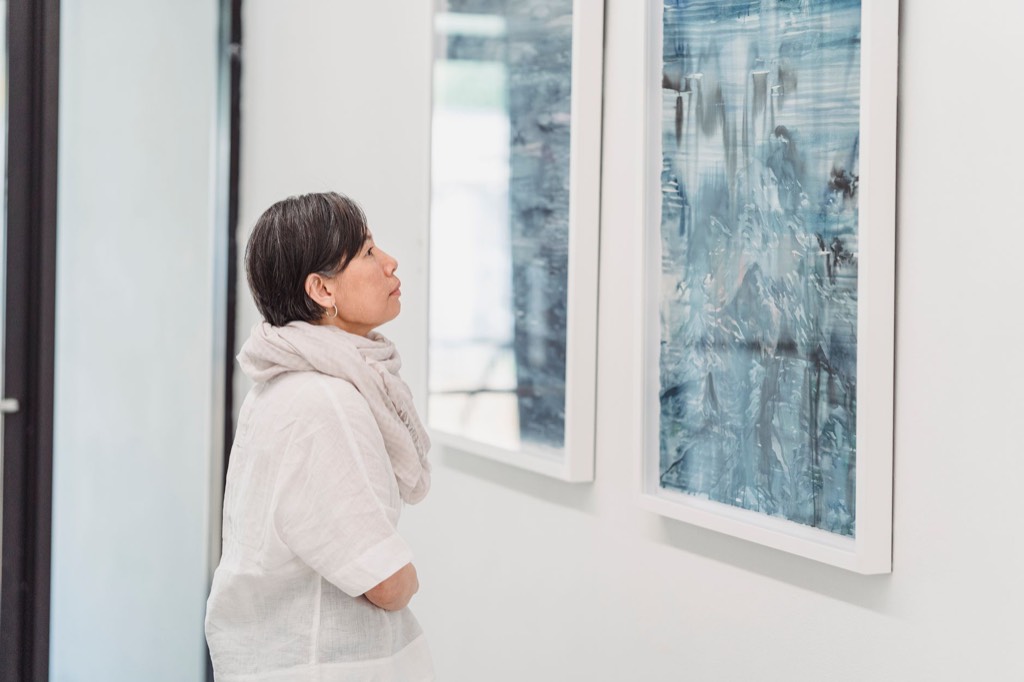
What all six share is patience. These painters trusted that someone, someday, would stand there a little longer than the rest and be rewarded for it. The next time you find yourself in front of a famous painting — in a museum or just a print on a wall — give it the extra minute. The best details were never hidden, exactly. They were just waiting to be noticed.
Sources
How much do you remember?
3 quick questions from the story above.
Enjoyed that? Play a full trivia quiz:
Play a Art quiz