You probably said one this morning without thinking twice. Maybe you mentioned needing to “touch base” with a colleague, or told someone that a project was “down to the wire.” These phrases are so woven into everyday speech that they barely register as figures of speech anymore—they’re just the way we talk. But each one started somewhere specific: on a particular patch of grass or canvas or dirt, where real people were doing something physical and intensely competitive.
The eight expressions below all crossed from the sports world into ordinary conversation. Some made the jump gradually, carried along by newspaper writers who loved a vivid verb. Others arrived all at once, probably because they captured something so exactly that nothing else would do. Either way, their origins are more interesting than you might expect—and knowing where they came from might make you hear them a little differently the next time one slips out of your mouth.
Touch base
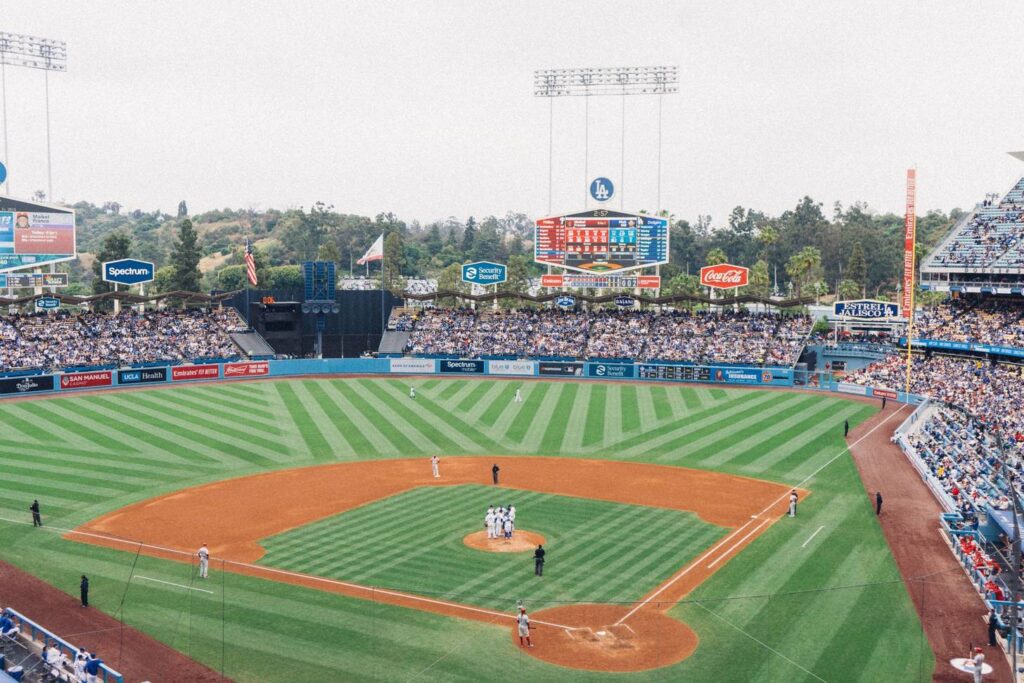
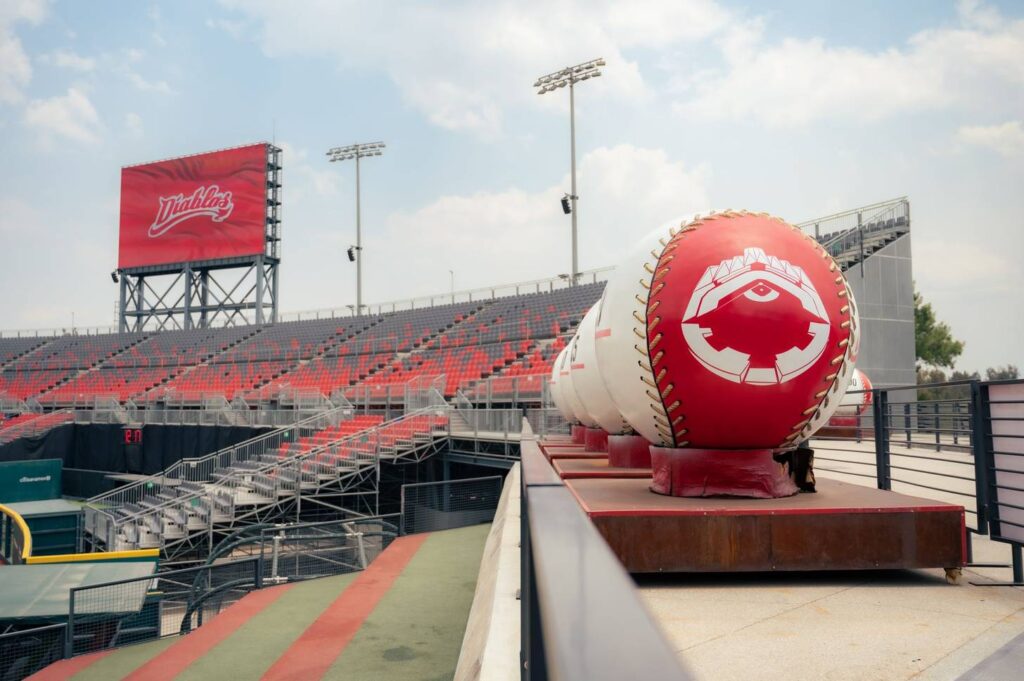
Born on the baseball diamondIn baseball, a runner who steps off a base without touching it can be put out. Touching base is what keeps you safe—it’s a moment of physical contact with something solid before you can move again. The figurative use, meaning to make brief contact with someone to check in or share information, appears in print by the early twentieth century, though the game had been using the literal phrase for decades before that.
It’s one of those phrases that survives because the metaphor still feels alive. When you “touch base” with a colleague before a big meeting, there’s still something of that original urgency in it—the quick hand to the bag, the confirming moment before you run.
Right off the bat
As fast as the ball fliesThe Oxford English Dictionary traces “right off the bat” to 1914, though a related phrase—“hot from the bat”—turns up even earlier, in an 1888 Mark Twain play. The image is of the ball leaving the barrel of a bat at the exact instant of contact, with no delay whatsoever. Baseball moves in long stretches of stillness punctuated by sudden bursts, and nothing in the game happens more swiftly than a well-struck ball leaving the wood.
That sense of zero-hesitation, immediate action is exactly what the phrase carries into everyday use. When something happens “right off the bat,” there’s no windup and no waiting. Twain knew what he was reaching for when he borrowed it.
Ballpark figure
A stadium-sized estimateThe word “ballpark” first showed up as a rough measure of scale—as in, “are we in the right ballpark?”—by the mid-1940s, and “ballpark figure” as a phrase appears in print by at least 1957, with a Des Moines Register citation on record. The connection to baseball stadiums makes visual sense: a ballpark is a large, loosely bounded space. You’re not being precise about the foul lines or the exact distance to center field. You just want to know if you’re roughly in the right vicinity.
It’s a wonderfully practical phrase—a little folksy, without any pretension. When someone asks for a ballpark figure on a home repair or a used car, they’re not asking for the final invoice. They just want to know whether the number is in the hundreds or the thousands. The stadium-sized approximation is exactly the point.
Jump the gun
From the starter’s pistolIn early track-and-field racing, a starter’s pistol was fired to signal the beginning of the race. A runner who bolted before the shot had “jumped the gun”—moved before the official signal. The phrase first appears in American English around 1912, and the image of an overager runner surging prematurely out of the starting blocks has proven remarkably durable across more than a century.
The figurative meaning—acting too soon, before the right moment—translates almost perfectly. A business that launches a product before it’s ready has jumped the gun. So has anyone who announces something before the decision is actually final. In the original, the runner had to stop, reset, and try again. So, often, do we.
Saved by the bell
Boxing’s round-ending rescueYou may have heard the story that this phrase comes from Victorian-era coffins fitted with bells to signal a person who had been mistakenly buried alive. It’s a vivid tale, and it circulates widely, but language historians have largely debunked it. The earliest documented uses of “saved by the bell” come from boxing—newspaper accounts from the 1890s describe fighters being rescued from a knockout because the bell ending the round rang in time.
That rescue is real and specific: a battered boxer who goes down near the end of a round may be spared a loss if the bell sounds before the referee’s ten-count finishes. It’s a temporary reprieve, not a permanent escape—and that’s exactly what the phrase means in ordinary speech. Something got you out of a bad spot, at least for now. The next round is still coming.
In the home stretch
The racetrack’s final straightHorse racing gave us this one. The “home stretch” is the final straight section of a racetrack before the finish line—the last run toward home. Etymological records trace the racing use to 1839, with the figurative sense following by 1859. It became a natural way to describe the final phase of any sustained effort: the last weeks of a campaign, the closing chapters of a long project, the year before retirement.
There’s something visceral about the image that keeps it alive. When you say you’re in the home stretch, you’re conveying not just “almost done” but also the particular feeling of that stage—the tired legs, the visible finish line, the quiet knowledge that stopping now would be absurd. Horse racing understood that sensation long before the phrase ever left the track.
Down to the wire
A literal finish lineIn the nineteenth century, some horse racing tracks stretched an actual wire across the finish line, giving judges a fixed reference point for determining which horse’s nose crossed first. When a race was still undecided all the way to that wire, it was “down to the wire.” The phrase captures something that almost no other expression does quite as well: not just close, but close at the very last possible instant.
The physical wire has long since vanished from modern tracks, but the phrase has outlasted the technology that named it. Any election, any championship game, any late-night negotiation that runs to the final possible moment is now “down to the wire.” The finish-line tension of those early tracks is fully present every time someone reaches for those four words.
Hands down
The jockey’s relaxed gripWhen a jockey was winning a horse race so comfortably that victory was certain, they would drop their hands—literally loosen the reins and stop urging the horse forward—because there was no need to push anymore. That gesture of easy, unhurried superiority gave us “hands down.” The phrase appears in British sporting writing by the 1850s and crossed into figurative use to mean “without a doubt” or “without effort.”
Today nobody thinks about jockeys when they say something is “hands down the best” choice, but the image of effortless dominance is exactly what persists inside it. It’s one of those phrases where the original physical gesture still lives in the meaning, even after the connection has faded so far from view that most people would never guess where it came from.
Sports have always given English some of its most physical, immediate language—words with motion and weight in them. The next time you tell someone you want to touch base, or call something hands down the obvious choice, there’s a dirt track or a diamond somewhere in the history of that ordinary sentence.
How much do you remember?
3 quick questions from the story above.
Enjoyed that? Play a full trivia quiz:
Play a General quizFrequently asked questions
Are there other common English phrases with surprising sports origins?
Absolutely—the sports world has contributed dozens of expressions to everyday English. Beyond baseball and horse racing, boxing alone gave us terms like “on the ropes” and “throw in the towel.” If you enjoy tracing where familiar language comes from, you might also enjoy our piece on everyday words English borrowed from other languages, which covers a different but equally surprising set of linguistic journeys.
Is the story about “saved by the bell” coming from Victorian coffin bells true?
It’s a compelling story, but language historians consider it almost certainly a myth. The earliest documented uses of “saved by the bell” come from boxing newspaper accounts in the 1890s, describing fighters rescued from knockouts when a round-ending bell rang in time. The burial-bell tale appears to have been invented long after the phrase was already in use.
Did Shakespeare coin any sports-related phrases?
Shakespeare contributed to the English language in remarkable ways, though his influence ran more toward drama and courtly life than athletics. For the fascinating phrases he did give us, see our article on everyday phrases that came straight from Shakespeare. Separately, our piece on where 10 everyday sayings really come from covers origins across many different domains.
Why did so many everyday phrases come from horse racing specifically?
In the nineteenth century, horse racing was one of the most widely followed and widely reported sports in both Britain and America. Racing terminology filled newspaper columns and everyday conversation in a way that few sports can match today. That cultural saturation meant racing phrases had plenty of opportunities to escape the track and enter general use—and once a vivid metaphor takes hold, it tends to stick.