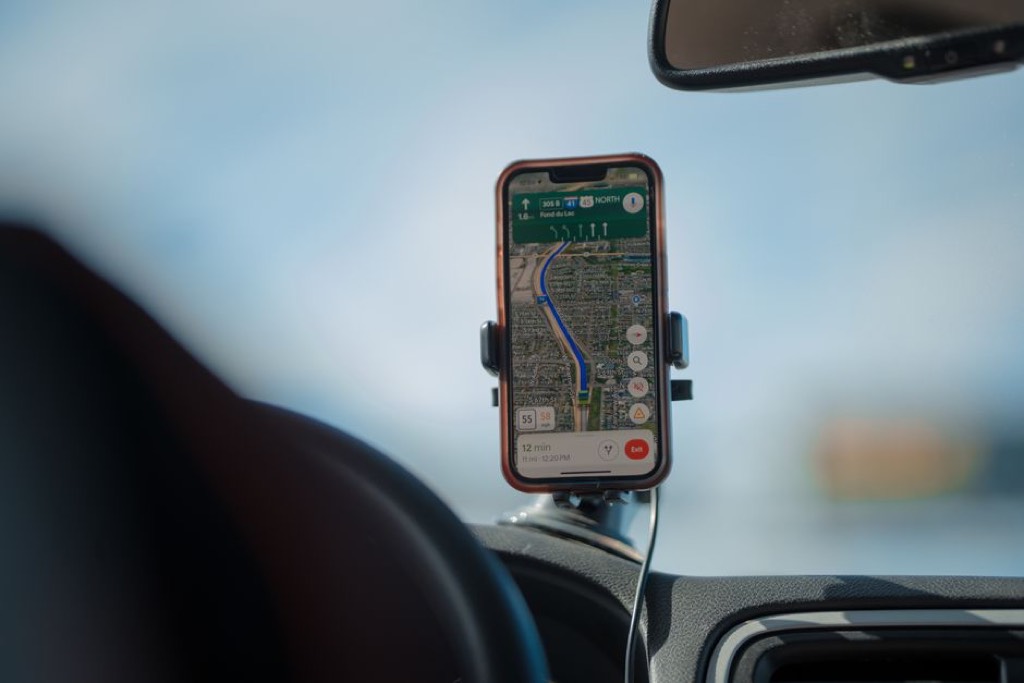
You tap a name into your phone, and a little blue dot knows exactly where you’re standing — down to the side of the street you’re on. You press a button and a metal box heats up leftovers without a single flame. You wave a paper ticket at a scanner and a door slides open. Most of us use a dozen small miracles before lunch and never once ask how any of them actually work.
So let’s ask. Here are seven everyday technologies, explained in plain language — accurate enough to be true, simple enough to be useful. Where we’ve smoothed over the hard math to keep things clear, we’ll say so.
How GPS Knows Where You Are
Satellites and stopwatchesHigh above you, a fleet of satellites is constantly broadcasting one simple message: “I am here, and the time is exactly now.” Your phone listens for these signals and measures how long each one took to arrive. Because radio waves travel at the speed of light, that tiny delay tells your phone how far away each satellite is.
Know your distance from one satellite and you could be anywhere on a huge sphere around it. Add a second, a third, a fourth, and the only spot that fits all of them at once is where you’re standing. That trick is called trilateration, and the timing has to be so precise that the satellites carry atomic clocks — because being off by even a millionth of a second would put you in the wrong town.
How Your Phone Finds You Indoors
When the sky's blockedGPS signals are faint by the time they reach the ground, and walls, tunnels, and skyscrapers swallow them easily. So how does your phone still know roughly where you are inside a mall? It cheats, cleverly, by listening to the Wi-Fi networks and cell towers around it.
Companies have quietly mapped the locations of millions of Wi-Fi routers and cell towers. When your phone spots a few familiar ones and notes how strong each signal is, it can look them up and estimate your position — no satellites required. It’s less precise than true GPS, but it’s why your dot doesn’t simply vanish the moment you walk indoors.
How a Touchscreen Senses Your Finger
You're a little bit electricYour phone’s glass is coated with an invisible grid of electrical conductors carrying a tiny charge. Your body, it turns out, conducts electricity too. When your fingertip gets close to the screen, it draws off a minuscule amount of that charge — and the phone notices exactly where the dip happened.
This is called capacitive sensing, and it explains a small everyday mystery: why the screen ignores your gloved hand or the eraser end of a pencil. Those don’t conduct electricity, so as far as the phone is concerned, nothing touched it at all. It’s not really feeling pressure — it’s feeling you.
How Noise-Cancelling Headphones Work
Fighting sound with soundThis one sounds like magic but is beautifully simple. Sound travels as waves, and any wave can be cancelled by an equal and opposite wave — a peak lined up against a trough. Noise-cancelling headphones have tiny microphones that listen to the drone around you, like a jet engine’s hum.
The headphones instantly generate a mirror-image sound wave and play it into your ears, and the two waves flatten each other out into near-silence. It works best on steady, low rumbles and struggles with sudden, unpredictable noise — which is why it hushes the airplane cabin far better than it hushes the baby three rows back.
Most of us use a dozen small miracles before lunch and never once ask how any of them actually work.
How Barcodes and QR Codes Store Data
A language of black and whiteA barcode is really just a number written in a language of stripes. Thick and thin black bars, separated by white gaps, stand in for digits a scanner can read in a flash. That number isn’t the price or the product name itself — it’s a code the store’s computer looks up to find them.
A QR code is the same idea in two dimensions, which lets it hold far more — a whole web address instead of just a number. The little squares in three corners tell your camera how the code is oriented, so it reads correctly whether you hold it straight or crooked. And a chunk of every QR code is deliberately redundant, so it still scans even when it’s smudged or partly torn.
How a Microwave Heats Your Food
Shaking the waterA microwave doesn’t heat your food from the outside in, the way an oven does. It floods the chamber with a specific kind of radio wave — a microwave — that happens to be tuned to water molecules. Those waves make the water molecules in your food flip back and forth billions of times a second.
All that frantic jiggling is friction, and friction is heat. That’s why food with lots of water warms fast while a dry plate stays cool, and why microwaved leftovers can be scalding in one bite and icy in the next: the heat starts wherever the water is, then has to spread. (One simplification worth flagging — the old line that microwaves “cook from the inside out” isn’t quite right; they heat everywhere the waves reach at once.)
How the Cloud Stores Your Photos
Someone else's computer“The cloud” is a lovely, vague word for something very concrete: enormous warehouses full of hard drives, humming away in data centers scattered around the world. When you back up a photo, it travels over the internet and lands on real disks in one of those buildings — not floating in the sky, but sitting on a shelf somewhere.
The clever part is redundancy. Your photo is usually copied to several drives, often in more than one location, so a single failed disk or flooded building never loses it. That’s the real trade of the cloud: you give up knowing exactly where your files live, and in return they’re kept safer, and reachable, from any device you own.
None of these are magic, and that’s the fun of it. Behind every effortless tap and beep is someone’s clever answer to a hard problem — a stopwatch race with satellites, a wave built to erase another wave, a warehouse of spinning disks pretending to be a sky. Once you can see the trick, the everyday world gets a good deal more interesting.
Frequently asked questions
How does GPS know where you are?
GPS satellites constantly broadcast a signal that says, in effect, “I am here, and the time is exactly now.” Your phone measures how long each signal took to arrive, and because radio waves travel at the speed of light, that tiny delay reveals how far away each satellite is. Combine the distances from four or more satellites and only one point fits them all — a technique called trilateration. The timing must be so precise that the satellites carry atomic clocks.
How does your phone find your location indoors without GPS?
GPS signals are faint and easily blocked by walls, tunnels, and skyscrapers, so indoors your phone switches to listening for nearby Wi-Fi networks and cell towers instead. Companies have mapped the locations of millions of routers and towers, so when your phone recognizes a few and notes how strong each signal is, it can estimate your position without any satellites. It’s less precise than true GPS, but it’s why your blue dot doesn’t vanish the moment you step inside a mall.
Why does a touchscreen ignore your gloved finger or a pencil?
A touchscreen works by capacitive sensing: the glass carries a tiny electrical charge, and because your body conducts electricity, your fingertip draws off a minuscule amount of it where you touch. The screen isn’t feeling pressure — it’s feeling you. A glove or the eraser end of a pencil doesn’t conduct electricity, so as far as the phone is concerned, nothing touched it at all.
Do microwaves really cook food from the inside out?
No — that’s a common myth. A microwave floods the chamber with radio waves tuned to water molecules, making the water in your food flip back and forth billions of times a second; that frantic jiggling is friction, and friction is heat. The waves heat everywhere they reach at once, which is why watery food warms fast while a dry plate stays cool, and why leftovers can be scalding in one bite and icy in the next as the heat spreads out from the water.
Sources
How much do you remember?
3 quick questions from the story above.
Enjoyed that? Play a full trivia quiz:
Play a Science quiz