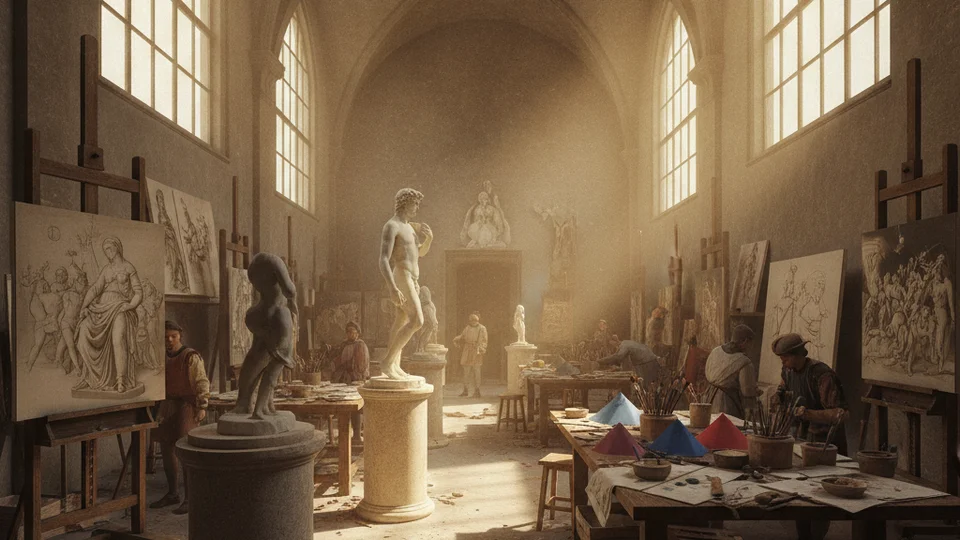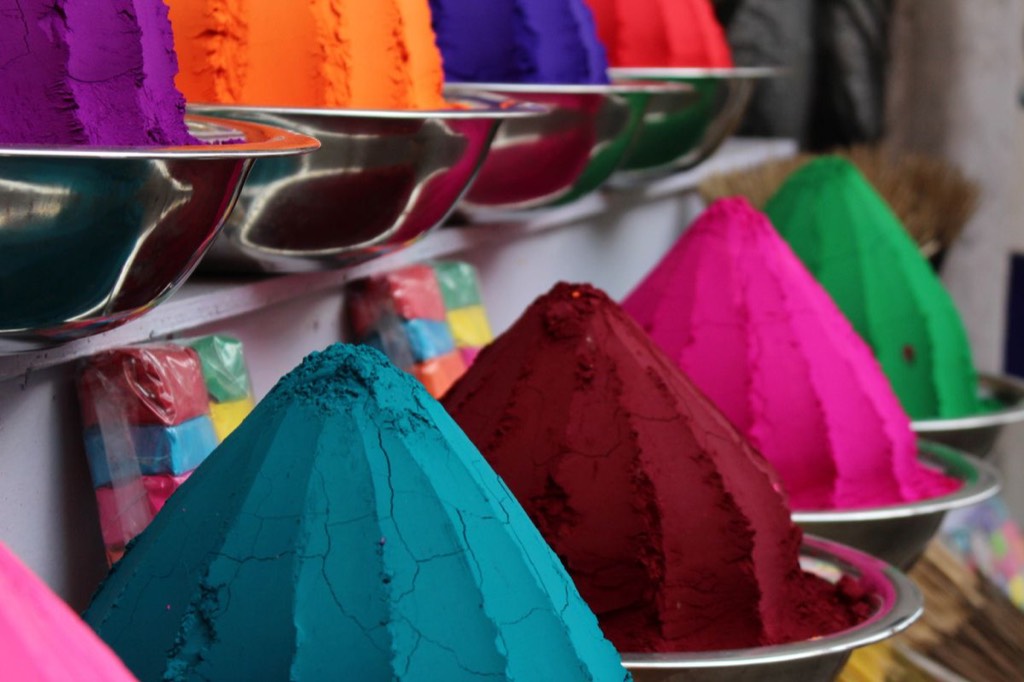
We take color for granted now. Want a tube of deep blue? It’s three dollars at the craft store, and there’s a whole wall of it. But for most of human history, certain colors were rare, difficult, and staggeringly expensive — a few of them literally worth more than their weight in gold.
Behind each of these hues is a strange, sometimes gruesome story: crushed insects, poisoned miners, ground-up mummies. Here are eight colors that once cost a small fortune, and what it actually took to make them.
Ultramarine
Ground lapis lazuli from AfghanistanThe most prized blue in the world came from a single stone: lapis lazuli, mined for centuries in the remote mountains of Badakhshan, in what is now northeastern Afghanistan. Grinding it into a pure, glowing blue was slow, wasteful work — most of the powder came out dull and gray, and only a fraction yielded that deep, saturated color. By the Renaissance, ultramarine was worth more than gold by weight.
Because it cost so much, painters saved it for what mattered most. Look at Italian panel paintings from the 1300s and 1400s and you’ll notice the Virgin Mary’s robe is almost always that same rich blue — a way of spending the most precious color they had on the most sacred subject. Patrons sometimes specified the exact amount of ultramarine in the contract, the way you might itemize gold leaf.
Tyrian Purple
Thousands of sea snails per gramAround 1200 BCE, the Phoenicians worked out how to squeeze a purple dye from murex sea snails — a tiny drop of mucus from each one that turned a fast, unfading purple in the sun. The catch was the arithmetic. It took something like ten thousand snails to make a single gram of dye, all of them cracked open and processed by hand in reeking coastal vats.
The result was so costly that it became the color of power itself. Roman emperors wore it, Byzantine rulers were “born to the purple,” and at certain points wearing it without permission could get you killed. When you hear someone described as royalty, this snail is quietly behind the metaphor.
Carmine
Crushed insects from the AmericasThe most brilliant red in Europe for centuries came from a bug. Cochineal insects live on prickly-pear cacti in Mexico and Central America, and the Indigenous peoples there — Aztec, Zapotec, Mixtec — had been harvesting them for a deep crimson dye for well over a thousand years before Europeans arrived. In Nahuatl the insect was nocheztli, “prickly-pear blood.” It takes roughly 70,000 of them to make a single kilogram of dye.
When the Spanish saw the color, they saw money. Cochineal became one of the most valuable things shipped out of the Americas — by some accounts second only to silver — and Spain guarded the secret of where it came from for generations. Europeans knew the red was priceless; many had no idea it was made of insects.
Mummy Brown
Literally ground-up Egyptian mummiesThis one is exactly as grim as it sounds. From roughly the 1500s onward, European colormen made a rich, transparent brown paint by grinding up actual Egyptian mummies — human and sometimes feline — usually blended with a little myrrh and pitch. Painters loved it for shadows and glazes and warm flesh tones, and it stayed on palettes for centuries.
The Pre-Raphaelites were fond of it in the 1800s, often with only a vague sense of what “mummy” really meant. As that awareness sank in, the appetite faded. One British supplier, C. Roberson, kept selling the color until the tubes finally ran out — it reportedly stopped in 1964, when the firm simply had no more mummies left to grind.
Europeans knew the red was priceless. Many of them had no idea it was made of insects.
Indian Yellow
Said to be from cow urine — disputedHere’s where we have to be honest, because the famous origin story is genuinely contested. For a long time the tale went that Indian yellow — a warm, glowing pigment sold as foul-smelling hard balls called “purree” — was made from the dried urine of cows fed only on mango leaves. The account traces back to a single report by T. N. Mukharji in 1883, and for decades many scholars doubted it, suspecting the color was purely plant-based.
So treat the cow-urine story as unproven folklore that turned out to have some support. In 2018, researchers testing a sample Mukharji himself collected found hippuric acid, a compound found in urine — evidence that the strange old story may have been right after all. Not settled, but no longer a myth to dismiss out of hand.
Vermilion
A gorgeous red made of mercuryVermilion is a fierce, warm red — and it’s mercury sulfide, which is to say it’s poison. It comes from the mineral cinnabar, and mining that was dangerous, expensive work because of the toxic mercury involved. The Chinese were probably the first to make a synthetic version, as early as the fourth century BCE, heating mercury and sulfur together in a process that gave off fumes you very much did not want to breathe.
Artists used it anyway, for centuries, because nothing else glowed quite like it. It shows up in illuminated manuscripts, in Titian’s reds, in temple lacquer across Asia. It was eventually replaced by safer cadmium reds in the twentieth century — a rare case of a beautiful color being retired mostly because it was trying to kill everyone who handled it.
Egyptian Blue
The world's oldest synthetic pigmentLong before ultramarine, the Egyptians simply invented blue. Around 3100 BCE they worked out how to heat sand, copper, and lime together into a stable blue compound — calcium copper silicate — making Egyptian blue the oldest known synthetic pigment on Earth. It coats tomb walls, statues, and coffins that still hold their color thousands of years later.
Then the recipe was lost. For a long stretch nobody in the West could make it, and researchers have spent recent years reverse-engineering how the Egyptians pulled it off. It has an odd modern afterlife, too: the pigment glows under infrared light, which conservators now use to spot faded traces of it on ancient objects.
Han Blue
China's own lost blueHalf a world away, ancient China developed its own synthetic blue on the same principle. Han blue — barium copper silicate rather than the calcium version — appears from around 1050 BCE, used on ceramics, on the famous terracotta warriors, and on ornamental objects. Making it took real furnace control and know-how, which is part of why it counted as a luxury.
Like its Egyptian cousin, Han blue eventually vanished from use, its recipe forgotten for centuries. Two civilizations, thousands of miles apart, each cooked up a durable blue from scratch — and each, in the end, lost the instructions.
It’s worth remembering all this the next time you squeeze out a blob of blue without a second thought. For most of history, color was rare enough to hoard, dangerous enough to poison you, or strange enough that people didn’t ask too many questions about where it came from. The cheap, endless rainbow on the shelf is one of the quieter luxuries of the modern world.
Sources
How much do you remember?
3 quick questions from the story above.
Enjoyed that? Play a full trivia quiz:
Play a Art quiz