Here’s a game that catches almost everyone out. Name the capital of Australia. If you said Sydney, you’re in very good company — and you’re also wrong. Same goes for Brazil (not Rio), Turkey (not Istanbul), and quite a few others. We tend to assume the biggest, most famous city must be running the show, but a surprising number of countries hand that job to somewhere smaller and quieter on purpose.
Often the reasoning is the same: pick a neutral spot so no single rival city gets to dominate, or build a brand-new capital from scratch to push growth into an empty region. Here are eight capitals that lost the popularity contest but won the title anyway.
Washington, D.C. — United States
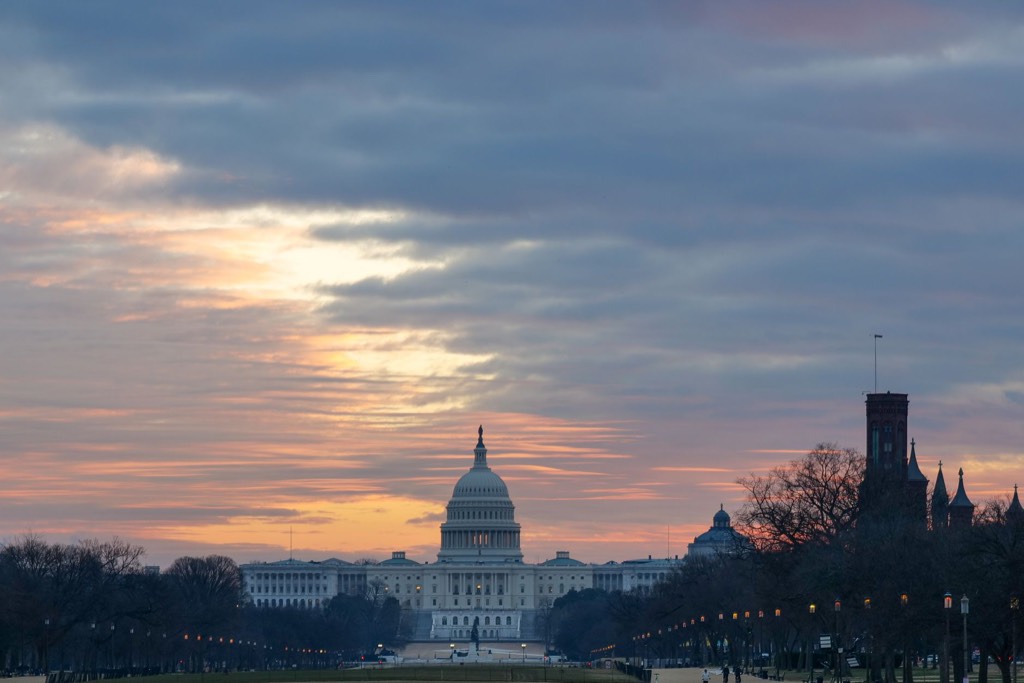
biggest city is New YorkNew York has more than eight million people; Washington has under 700,000. Yet the capital was deliberately planted on a patch of swampy land carved out of Maryland and Virginia — a brand-new federal district belonging to no state at all.
That was the whole point. After the Revolution, northern and southern states each wanted the capital on their turf, and the young country didn’t want any existing city holding that kind of power. The compromise, brokered in 1790, was to build a purpose-made capital on the Potomac, roughly between the two regions. Nobody won, which meant nobody lost.
Canberra — Australia
biggest city is SydneyThis is the classic trick question. Australia’s largest city is Sydney, its second-largest is Melbourne — and its capital is neither. It’s Canberra, a planned city of around 460,000 sitting in its own territory between the two.
Sydney and Melbourne spent the early 1900s bickering over which deserved to be the national capital. Rather than crown a winner, the new federation chose a compromise: a fresh capital built roughly halfway between them, on land that became the Australian Capital Territory. An American architect, Walter Burley Griffin, won the competition to design it from the ground up in 1913.
Brasília — Brazil
biggest cities are São Paulo and RioFor most of its history Brazil ran from the coast — first Salvador, then Rio de Janeiro. But the coast was crowded and the vast interior sat nearly empty. So in the 1950s the country did something audacious: it built an entirely new capital in the middle of nowhere.
Brasília rose from the highland scrub in under four years, opening in 1960. Laid out by planner Lúcio Costa in the shape of an airplane or a bird and studded with the swooping modernist buildings of Oscar Niemeyer, it was designed to pull people and development inland. Rio and São Paulo remain far larger, but the government works from the plateau now.
Ottawa — Canada
biggest city is TorontoToronto and Montreal are Canada’s giants, but the capital is Ottawa — a mid-sized city on the border between Ontario and Quebec, English Canada on one bank and French Canada on the other.
Back in 1857, the Province of Canada couldn’t agree on a permanent capital, with rival cities each pressing their claim. The decision was famously kicked up to Queen Victoria, who chose Ottawa — then a rough lumber town. Its spot on the linguistic dividing line made it a tidy compromise, and being tucked inland made it easier to defend than the border cities. The choice stuck.
We assume the biggest, most famous city must be running the show. A surprising number of countries hand that job to somewhere smaller on purpose.
Ankara — Turkey
biggest city is IstanbulIstanbul is one of the most storied cities on Earth, straddling two continents and home to some 16 million people. And yet Turkey’s capital is Ankara, a far smaller city up on the Anatolian plateau.
The move was political and deliberate. When Mustafa Kemal Atatürk founded the modern Turkish Republic in 1923, he wanted a clean break from the Ottoman past that Istanbul embodied. Ankara sat safely in the heartland, away from the vulnerable coast, and made a fitting base for a new, forward-looking nation. It has grown enormously since, but Istanbul is still the far bigger city.
Wellington — New Zealand
biggest city is AucklandAuckland, way up in the north, holds roughly a third of New Zealand’s entire population. The capital, though, is Wellington — a compact, windy city at the southern tip of the North Island.
Auckland actually was the capital until 1865. But as settlement spread to the South Island, southerners grumbled that the seat of government was stuck too far north to represent the whole country. Wellington, sitting near the geographic center, was chosen as a more central compromise. It has been the capital ever since, even as Auckland kept pulling ahead in size.
Bern — Switzerland
biggest city is ZurichAsk people to name Switzerland’s capital and you’ll hear Zurich, or maybe Geneva. Both are wrong. It’s Bern — and technically, Switzerland doesn’t even call it a capital, but a “federal city.”
When the modern Swiss federal state formed in 1848, choosing a dominant city like Zurich or Geneva risked upsetting the delicate balance among the cantons. Bern was picked as the seat of government precisely because it was a more modest, centrally located compromise that wouldn’t lord it over the others. That very Swiss instinct for balance is why the medium-sized city, not the financial powerhouse, holds the government.
Abuja — Nigeria
biggest city is LagosLagos is a megacity of well over 15 million and one of the busiest places in Africa. It was Nigeria’s capital, too — until the government decided to pack up and move to Abuja, a purpose-built city near the country’s center, in 1991.
Lagos was bursting at the seams, crowded and congested, and it sat in the country’s Yoruba-majority southwest. Abuja was planned from scratch on more neutral ground in the middle of the country, belonging to no single ethnic region — a way to give every Nigerian a shared, central capital. As with so many on this list, the biggest city kept the crowds, but the government chose somewhere new.
Notice the pattern running through nearly all of them: compromise. Whether it’s a swamp on the Potomac, a paddock between Sydney and Melbourne, or a fresh city raised out of the Brazilian scrub, the goal was usually the same — find neutral ground so no rival city, region, or language gets to dominate the rest. (South Africa took the idea even further, splitting its capital duties across three cities — Pretoria, Cape Town, and Bloemfontein — so no one place holds all the power.) So the next time a quiz asks you for a capital, resist the obvious answer. It’s often the second guess that’s right.
Frequently asked questions
What is the capital of Australia?
Australia’s capital is Canberra, not Sydney or Melbourne. Sydney is the largest city and Melbourne the second-largest, but the two spent the early 1900s bickering over the title, so the new federation built a fresh capital roughly halfway between them in its own territory. An American architect, Walter Burley Griffin, won the competition to design the planned city from the ground up in 1913.
Why isn’t the biggest city usually the capital?
In most of these cases the answer is compromise. Rather than let one dominant city, region, or language group hold all the power, countries often pick a smaller, more neutral spot — or build an entirely new capital — so no rival gets to dominate the rest. Washington, Canberra, Ottawa, and Bern were all chosen for exactly this balancing reason.
Why did Brazil build Brasília as its capital?
For most of its history Brazil was run from the crowded coast, first Salvador and then Rio de Janeiro, while the vast interior sat nearly empty. In the 1950s the country built an entirely new capital inland to pull people and development into that empty region. Brasília rose from the highland scrub in under four years and opened in 1960, though Rio and São Paulo remain far larger.
Which city is the capital of Turkey?
Turkey’s capital is Ankara, not Istanbul. Although Istanbul is far larger, with some 16 million people straddling two continents, Mustafa Kemal Atatürk chose Ankara when he founded the modern Turkish Republic in 1923. He wanted a clean break from the Ottoman past that Istanbul embodied, and Ankara sat safely inland on the Anatolian plateau, away from the vulnerable coast.
Sources
How much do you remember?
3 quick questions from the story above.
Enjoyed that? Play a full trivia quiz:
Play a Geography quiz